The first six months of 2024 were filled with indecision as I struggled to choose between Japan and Greece for my autumn travel destination. It was exhausting to remain on the fence. On a bright sunny morning, the answer became clear. I chose the Land of the Rising Sun. The weakening of the Japanese yen also made the decision easier.
After some research, a 14-day trip would be an ideal to explore the following cities in the order below.
TOKYO —> ODAWARA —> KYOTO —> OSAKA
To prevent turning this post into an extremely long essay, I am going to split my Japan experience into 4 unequal parts.
- TOKYO (4D 4N)
- ODAWARA (3D 3N)
- KYOTO (3D 2N)
- OSAKA. (4D 3N)
Throughout your reading journey, you’ll find tips and travel hacks highlighted in bold, so be sure to look out for them!
<DAY ZERO>
You might be wondering, why day zero? It’s because we only arrived Tokyo at 6pm.
After checking in our bags at the airport, we strolled past the immigration without our passports. This passport-less clearance was implemented about a month ago in all 4 terminals of Changi Airport. While we were in the sky, I realized that the passport-less system meant our personal data was stored in the cloud. Talk about perfect timing.
We decided to opt for the full package experience by flying with ANA(All Nippon Airways), Japan’s largest airline. The experience was really pleasant, (better than Singapore Airlines) in my honest opinion.
Upon landing at Haneda Airport, the immigration process was seamless. As someone who appreciates efficiency and well-designed systems, I enjoy observing the small details in the operations. Multiple counters were available, and staff members actively managed the queues, directing each person to the appropriate lane based on availability. It was a perfect example of a FIFO (First-In, First-Out) system in action. Little did I know, this level of efficiency would be the standard throughout my whole trip.
Thanks to the recommendation of a friend, I decided to use the SUICA Card on Apple Wallet, due to the lack of physical cards. It is a transportation + prepaid card which can be used in almost every retail outlet. During the whole trip, I only used 3 modes of payment.
- Suica Card
- CASH (for street markets & small vendors)
- YouTrip Card* ( A multi-currency wallet with a debit card & 0% transaction fees)
*This is not a Sponsored Post & Youtrip is only available for people residing in Singapore
We arrived at the hotel around 9 p.m. and used a self-check-in kiosk, experiencing the novelty of checking into a room without any human interaction. Near the lift lobby, we noticed a counter stocked with toiletries & tea bags, accompanied by a sign that read self-service. A mischievous voice in my head suggested grabbing extras to take home, but another voice reminded me to embrace an abundance mindset. Japanese culture is deeply rooted in trust, so I reminded myself to “do as the Romans do” and take only what I needed. Throughout our stay, I encountered several moments where I could have “exploited” the system. This was the first.
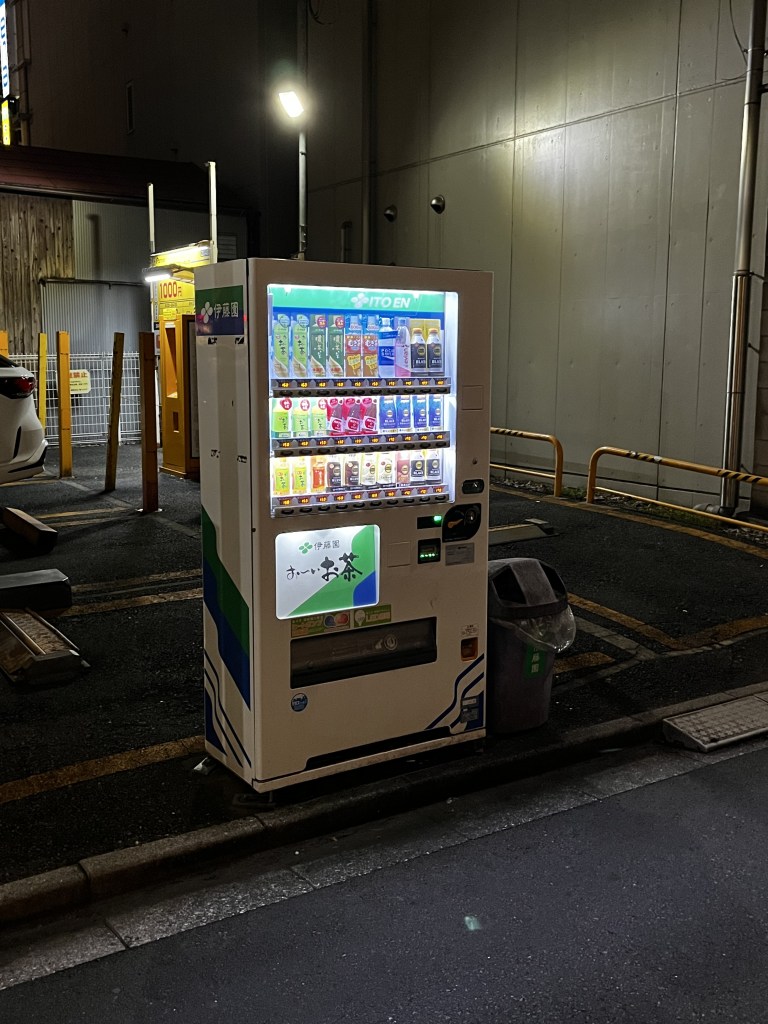
We headed down an hour later to Family Mart, and the chilly night breeze felt refreshing. I picked up an egg sandwich & some protein bread for breakfast. The young lady at the cashier was my first interaction with a local in Japan. Her questions overwhelmed me at first, but thankfully the store is well prepared with signs for foreigners. The typical conversation at a convenience store is as follows.
Konniciwa(Hello)
Fukuro irimasu ka?(do you want a bag)
Hai(YES) OR daijyoubu desu(NO)
Arigato gozaimasu (Thank you)
TIP: Bring along a reusable grocery bag(the ones that can be folded into a pouch)
<DAY ONE>
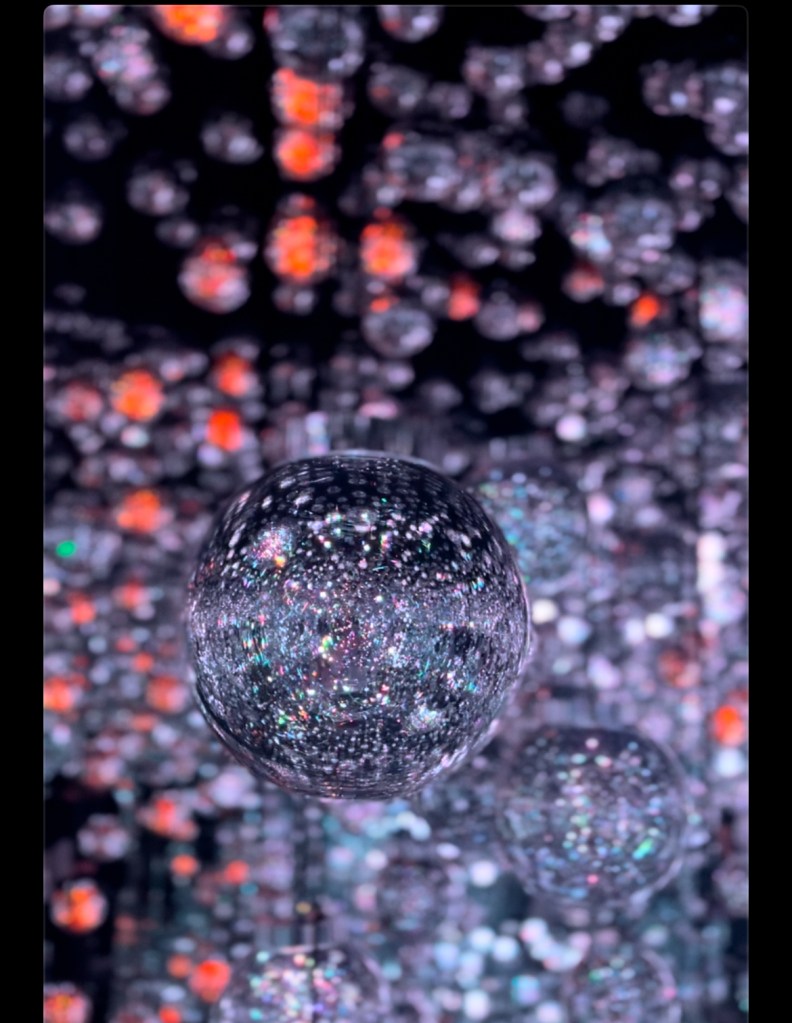
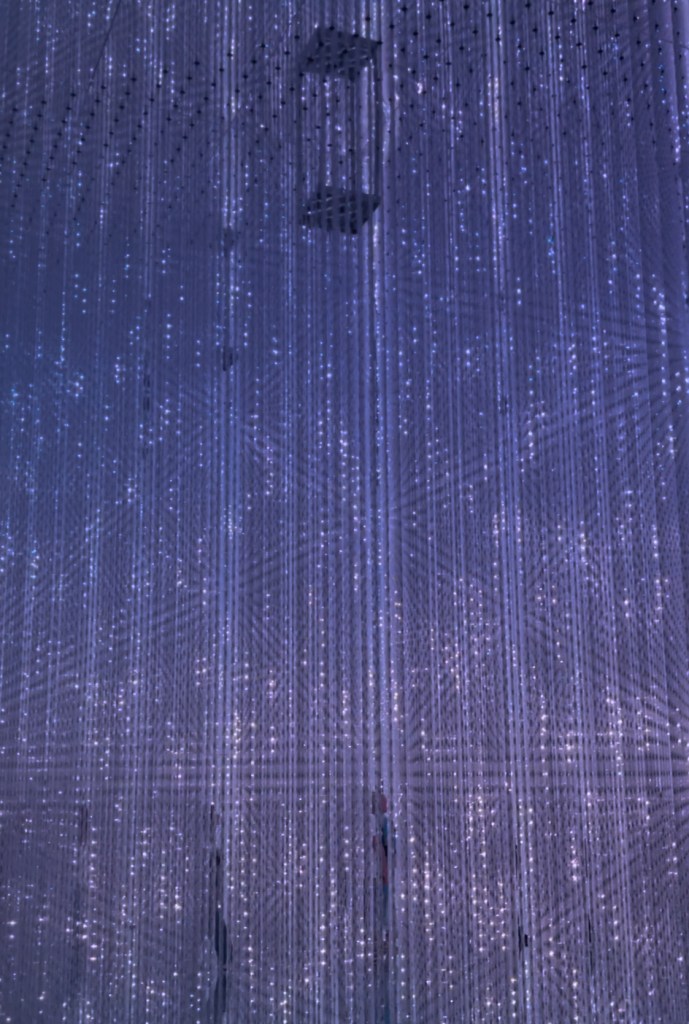
Teamlab Borderless is an immersive art museum that teleports you to an otherworldly realm. I was skeptical about it being an overrated tourist attraction, but I couldn’t be more grateful that I chose to experience it. I’ll leave you with some photos & you can decide if it was a wise decision.

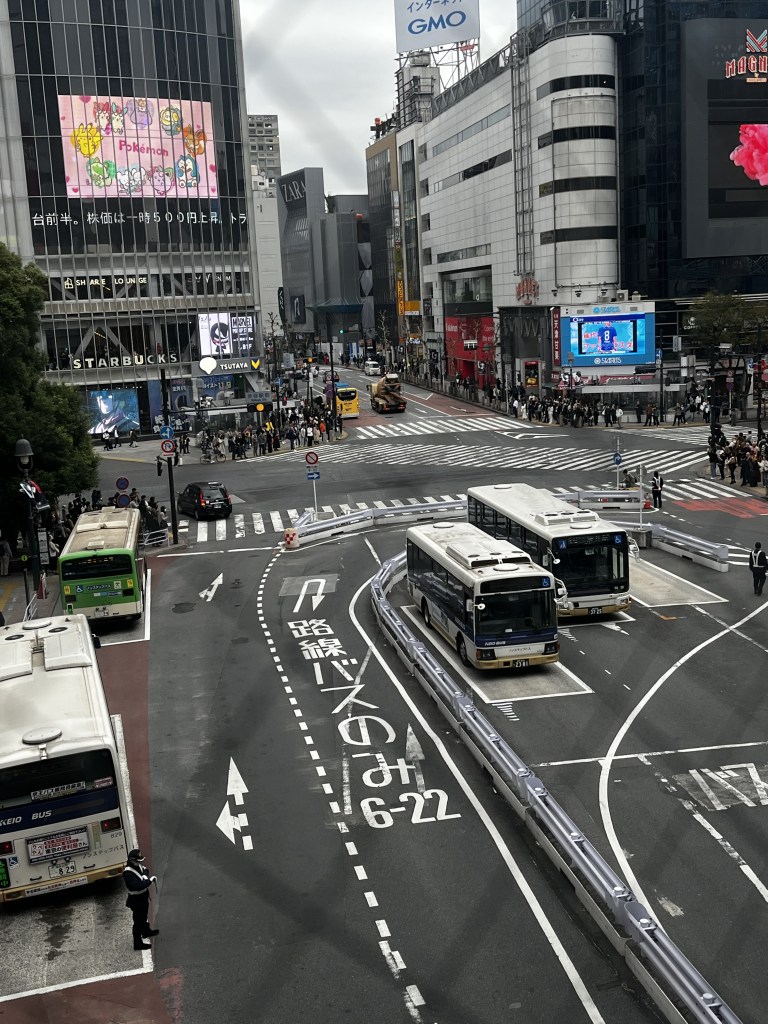
It was time to switch from artificial light to sunlight. Our destination? The iconic Shibuya Scramble Crossing, the world’s busiest pedestrian intersection. This famous spot has been prominently featured in films and documentaries, including one of my favorite Netflix shows, Alice in Borderland. Visiting it was on my bucket list. Surprisingly, the experience wasn’t overwhelming; the crossing felt much smaller than imagined, yet its charm was undeniable.
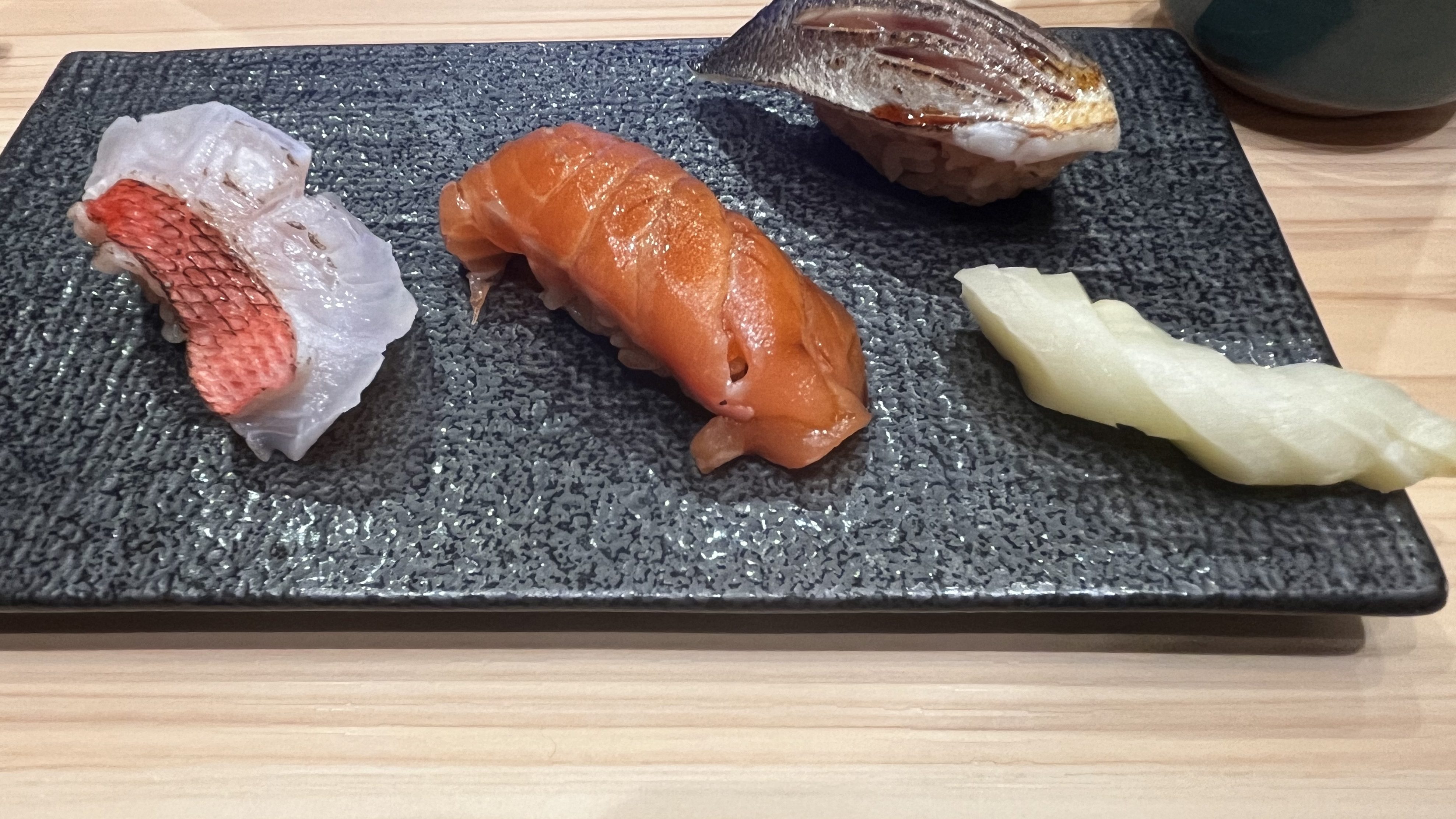
We had lunch at Kaiten Sushi, conveniently located just across the street in the basement of an office building.. It is an omakase sushi restaurant with patrons seated at a counter facing the chef, who skillfully prepares each dish in plain sight. It was a unique experience for me(The most expensive sushi meal I ever had). Prices ranged from 500 to 1500 yen per piece, and after spending around 3000 yen on lunch, I found myself still a little hungry.
A short train ride took us to our next destination. The bunch of furry pups at Dog Heart was in for a surprise. It is time to release some oxytocin. The excitement built up tremendously as we ascend the spiral stairs to the cafe. It wasn’t really a cafe which sells food. We felt the welcoming energy from the dogs as we removed our shoes. They were highly socialized & friendly. There was a Caucasian lady seated by the window, radiating a calm vibe that was almost contagious. We later learned she had been living in Tokyo for eight years and she gave us a few cafe recommendations across the street.
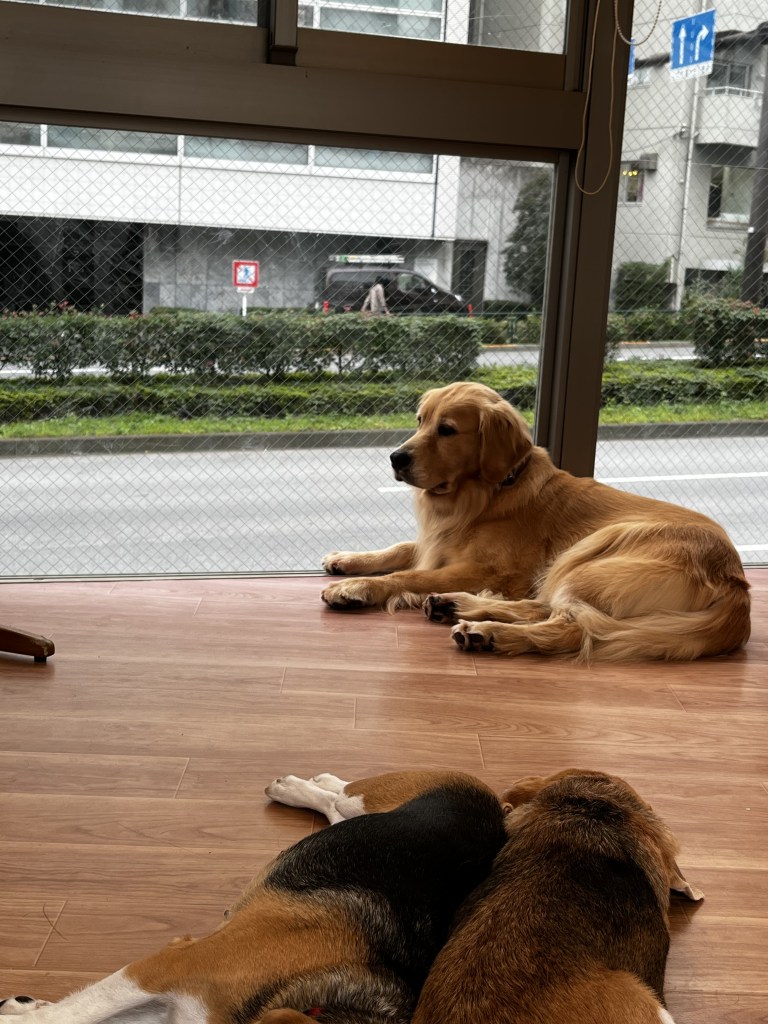
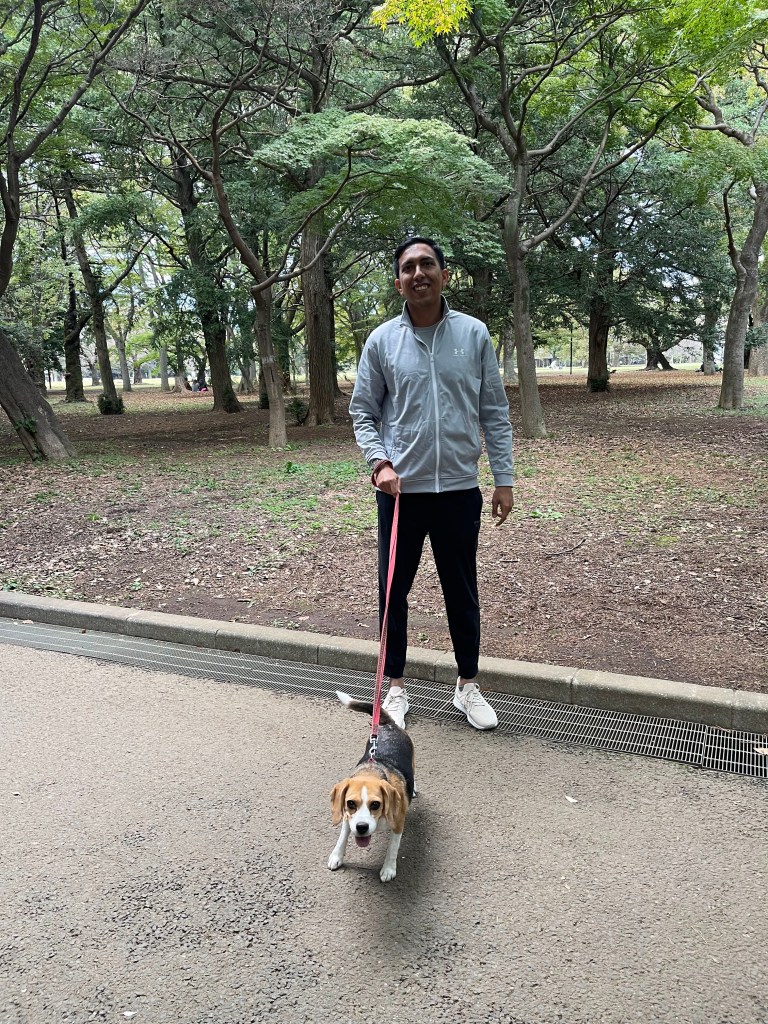
After spending an hour relaxing with the dogs, we faced the tough decision of choosing which one to take for a walk to Yoyogi Park. Ultimately, we settled on a beagle named RunRun. She appeared well-behaved and leaped with excitement when the owner fastened her leash.
The cost to rent a dog for a walk is ¥3,600 for an hour, plus an additional ¥500 for a 15-minute extension. Before heading out, we were provided with a cleaning kit and given a quick rundown of the do’s and don’ts, including instructions on how to clean up after the dog. True to her name, RunRun was full of energy, happily running in circles as soon as we stepped outside.
Yoyogi Park was just a five-minute walk away, but during that short time, we had to make a few stops for RunRun to do her business! That’s when I came to a sudden realization. Instead of being paid to walk and clean up after the dog, we were actually the ones paying for the privilege! It dawned on me that Dog Heart’s business model cleverly relies on customers to take the pups out for walks and handle their cleanup. No wonder there was only one staff member running the entire cafe. A self-sustaining system indeed!
After sunset, we realized it was still too early for dinner. In autumn, the sun sets around 5 PM in Japan, so please plan your itinerary carefully to make the most of the shorter daylight hours. We stopped by a Uniqlo store to “browse” the collection, but moments later, browsing turned into buying. I couldn’t resist their impressive range and ended up purchasing a sweater & a pair of Heattech track pants, all for under 5000 yen. While queuing at the changing rooms, I noticed that the staff would wipe the floor inside each room before each person, even though shoes were removed before entering. It was yet another impressive aspect of Japanese culture.
Tip: Heattech is highly recommended for colder climates. Its innovative fabric reduces the need for multiple bulky layers.
Day 1 completed with a grand total of 20,220 steps.
<DAY TWO>
We explored the three major convenience stores: Lawson, 7-Eleven, and Family Mart. There was so much to try that our best option was to buy small portions of various food items to share. Egg sandwich & Flavored breads are my go-to.
Tip: It’s always better to travel in a group as the chances of hitting the jackpot and finding something really tasty are much higher!
After breakfast, we discovered a tranquil shrine just a 15-minute walk from our hotel. To our surprise, there were no other visitors on a weekday morning. It felt like we had stumbled into a peaceful village far removed from civilization, yet it was just a stone’s throw away from the main road.
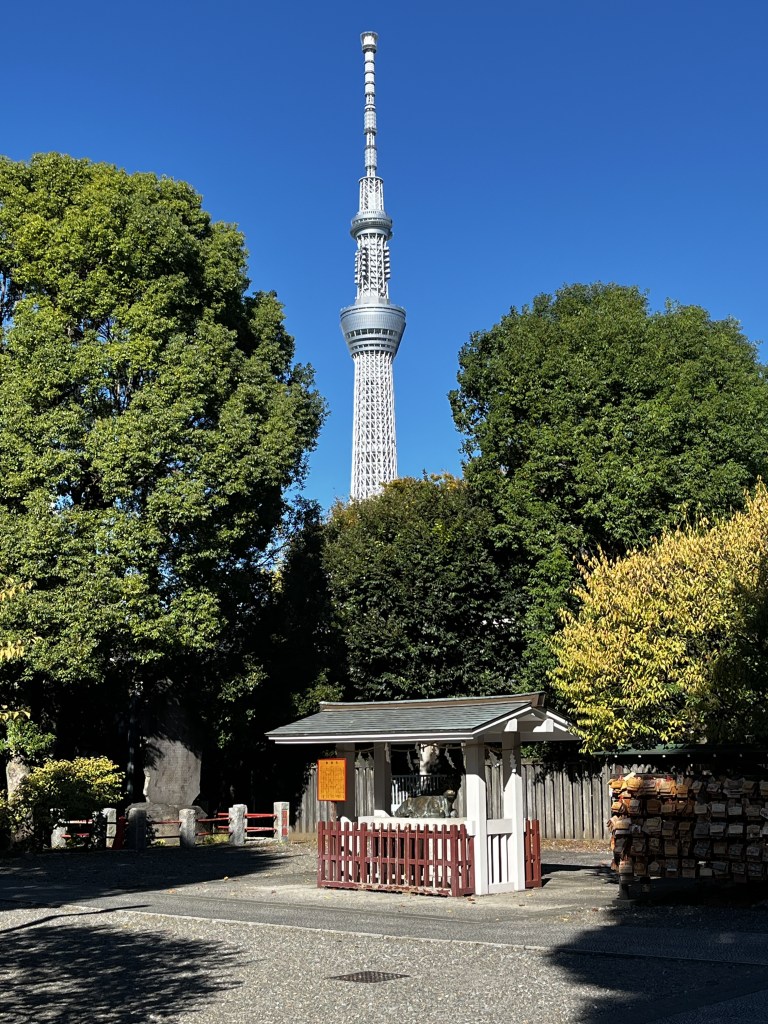
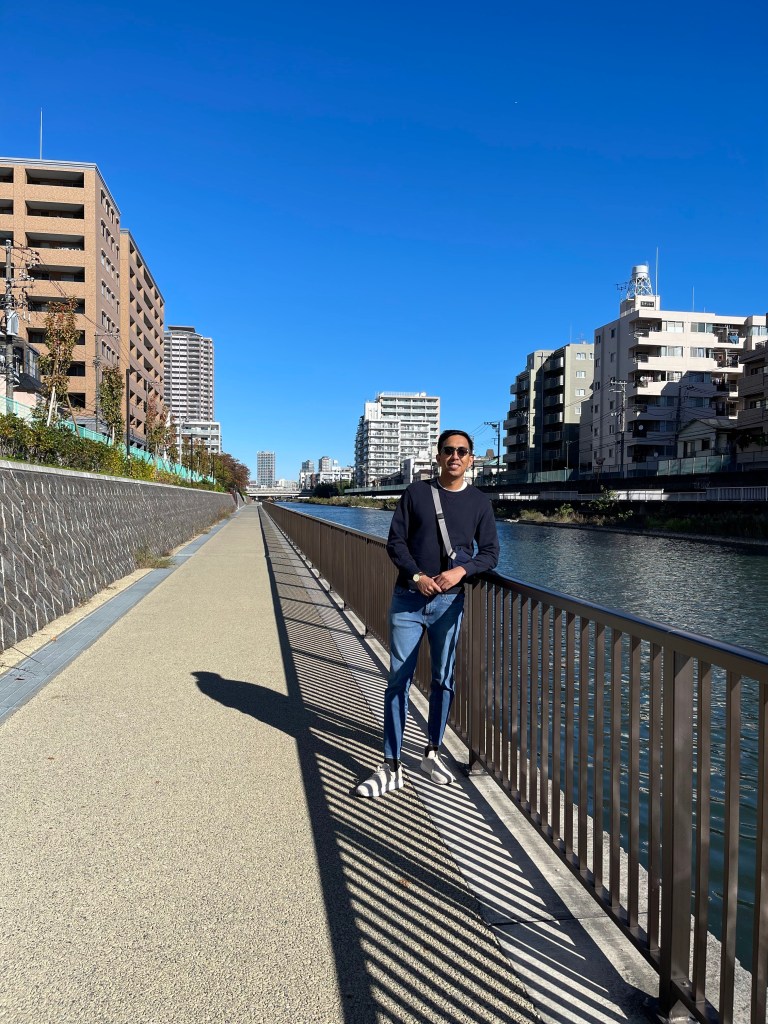
We headed to Tokyo Skytree on foot, passing by Oyoko River. The straight path along the river was almost vacant. We came across a man on a paddleboard. Further along, we encountered an elderly man fishing by the riverbank. It was a truly good start to the day, reminding us of the simple pleasures of walking, which is not only a great way to explore but also one of the most effective habits for promoting longevity. This morning walk was one of the precious moments of the trip.
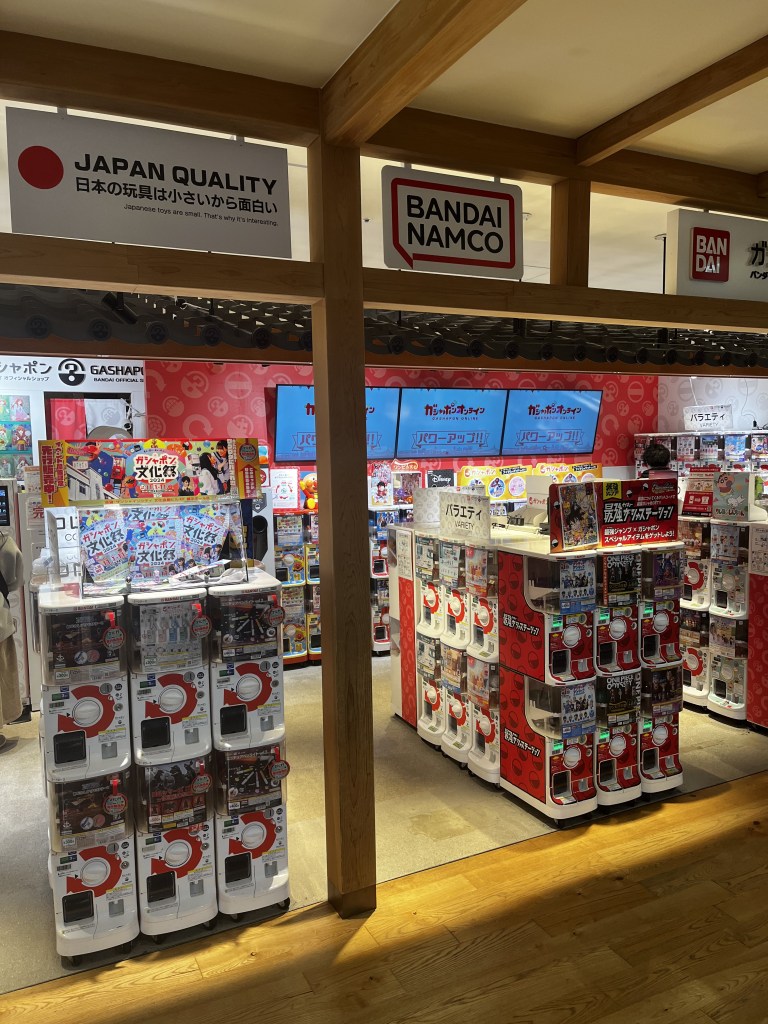
Instead of getting tickets to the observation deck, we decided to explore the mall instead. We stumbled upon a gachapon area, and I couldn’t resist checking it out. There, we found a funky and quirky selection of toys and keychains.
They even had a machine to recycle the empty plastic capsules. A clever way to make the experience full circle. Pun intended.
For the past few days, trains have been our only mode of transport, here are a few useful insights:
- Not all exits have an escalator – Be ready to climb stairs, especially at smaller or older stations.
- It’s normal to see the elderly using the stairs – A humbling sight that reflects their resilience and active lifestyle.
- Stations have plenty of exits – Navigating them can feel like a maze, but they’re incredibly efficient.
- Google Maps is a lifesaver – It even tells you which door to board for the quickest exit.
- Plan your exit route on the train – This helps you avoid looking lost and blocking others on the platform.
- Prepare for a lot of walking – Transferring between lines often involves long corridors and multiple flights of stairs.
I remembered getting stuck at a station because my Suica card hadn’t registered my entry. I had to inquire at the station office, where they asked which station I had boarded from. I answered honestly, and they resolved the issue instantly. (That was the 2nd chance I could lie & get away with it)
After enjoying a delicious Unagi lunch, we took on our first public bus ride in Tokyo. During the journey, we encountered schoolkids, some as young as 7 or 8, commuting entirely on their own without adult supervision. One boy, who had dozed off on the bus, caught my attention. I wondered if he would wake up in time for his stop. A couple of stops later, he suddenly shouted, frantically pressed the bell, and dashed out just moments before the bus moved on. I really hoped he hadn’t missed his destination. It was truly admirable to witness these young children commuting independently in such a safe and secure environment. It’s a testament to the trust & safety in Japan, an excellent model for others to follow.
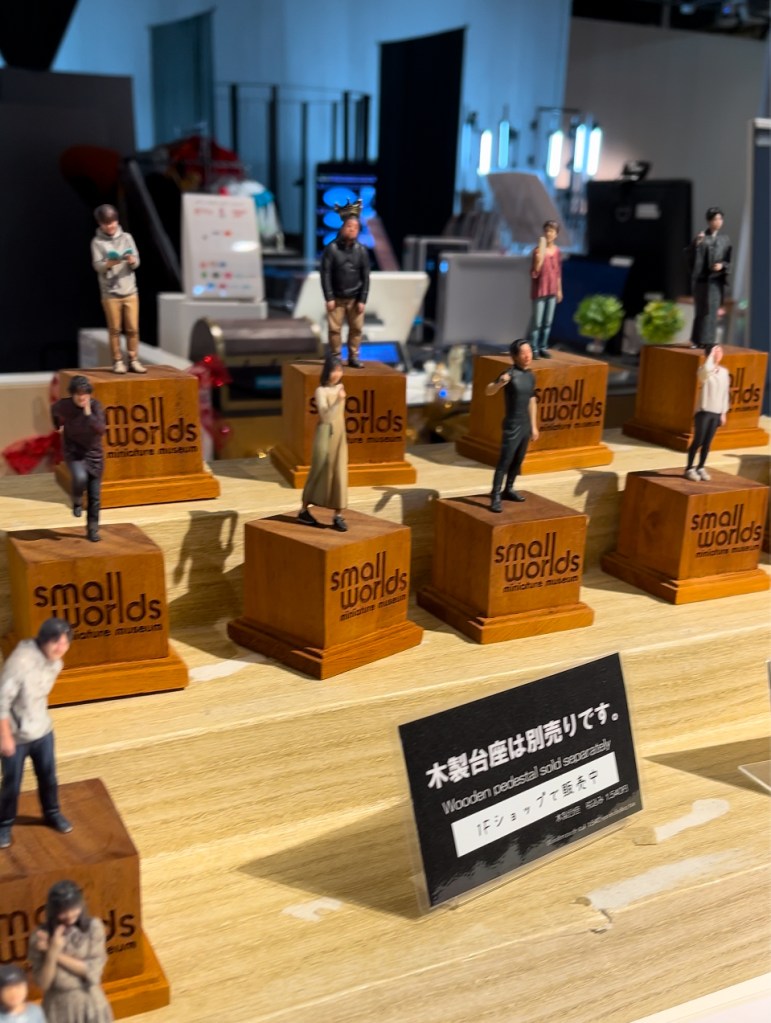
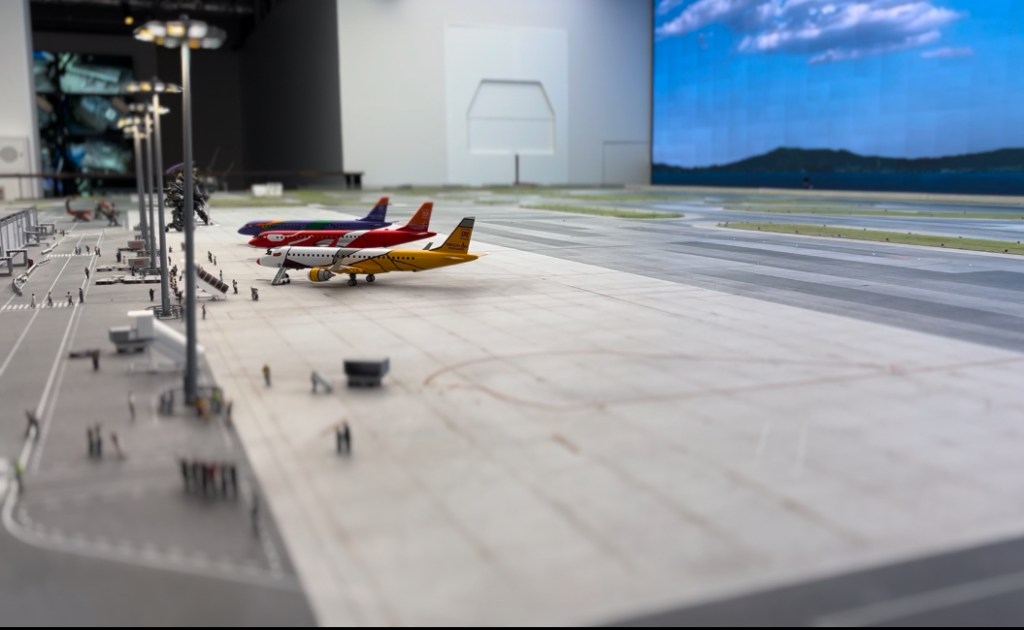
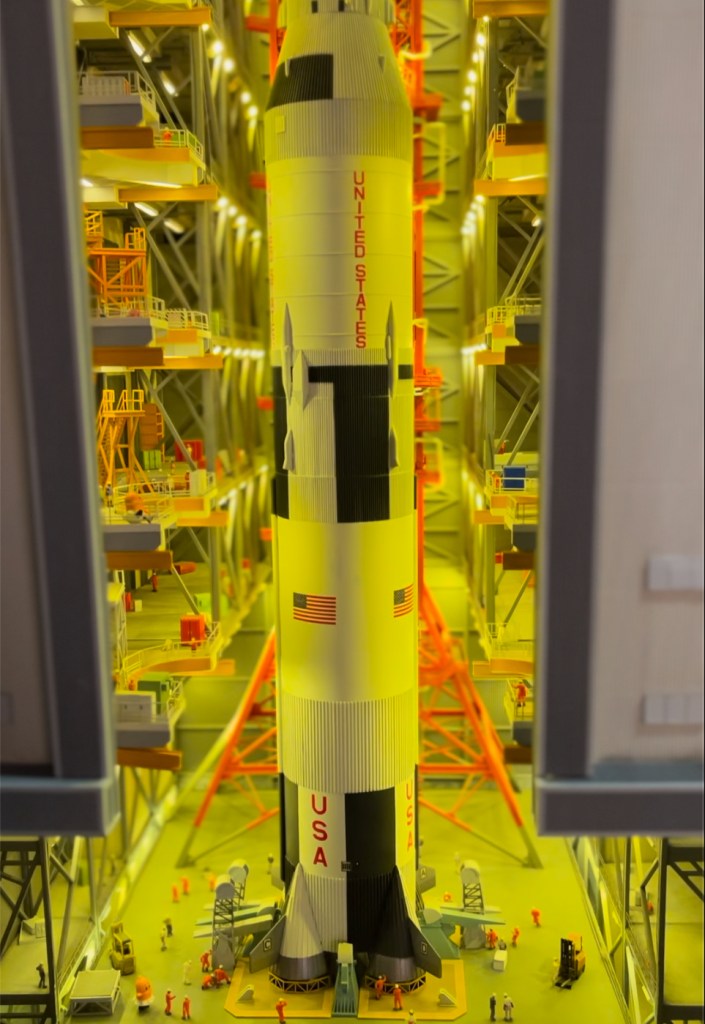
We spent the late afternoon exploring Small Worlds Museum. As the name suggests, it is a mesmerizing showcase of intricately crafted miniature worlds. From bustling cityscapes to serene countryside scenes, every exhibit is filled with stunning details, making you feel like a giant peering into another world. I was intrigued by the fine detail of the crafts & exhibits, they even offered a service to sculpt a miniature version of yourself. Using multiple cameras arranged around a circular stage, the museum achieves this impressive feat of creating a detailed miniature model. Though it takes two months to complete, they offer worldwide shipping.
As night settled in, I felt a slight tingling in my nose. The cold, dry air makes it more susceptible to a runny nose. It was the perfect cue to get some rest and prepare for the adventures tomorrow.
Day 2 completed with a grand total of 19,072 steps.
<DAY THREE>
We woke up early to pack our bags and checked out an hour later. Despite not feeling my best, I was excited to spend the final night in Tokyo at the Muji Hotel.
Tip: Muji Hotel is highly popular, so make sure to book at least two months in advance to secure your stay and avoid disappointment.
After dropping off our bags, I needed medication for my runny nose. We went to Matsumoto Kiyoshi, a popular pharmacy chain in Japan. A store attendant, likely a pharmacist, helped us choose an over-the-counter flu medication. Using the Payke app (this app allows you to scan the product QR code for English information), I checked the details and decided on one. I took a pill in Ibiza the streets of Tokyo. It worked wonders, clearing my nose for hours. Yet another reminder of the high quality of Japanese products!
After that brief detour, we headed to the Tsukiji Outer Market to enjoy some light bites and shop for souvenirs before making our way to the Railway Museum.
The Railway Museum is located in Saitama, a small town north of Tokyo, and it took over an hour to get there. For someone from a small island, it felt like quite a journey. There were plenty of informative sections on display, including a Train Simulator Room for train enthusiasts.
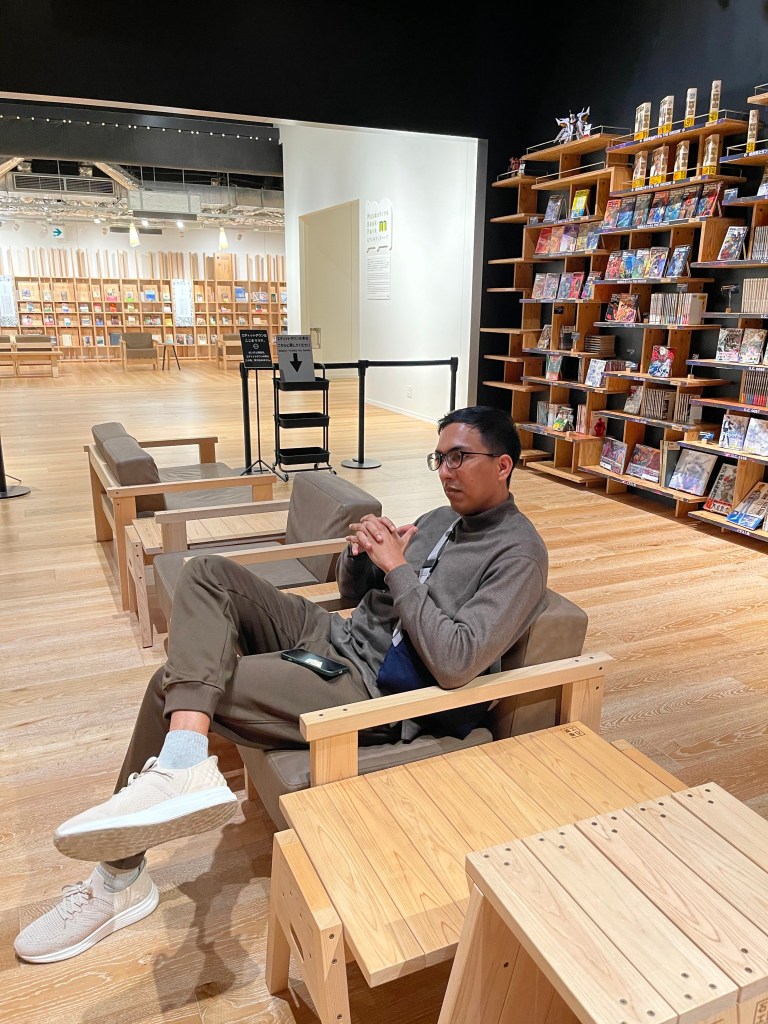
Afterwards, we headed to the Kadokawa Museum, which also doubles as a library—a haven for book lovers. Surrounded by a peaceful, quiet neighborhood, we didn’t see any tourists around, which felt a bit unusual. I highly recommend it to anyone looking for a short escape from Tokyo’s bustling cityscape.
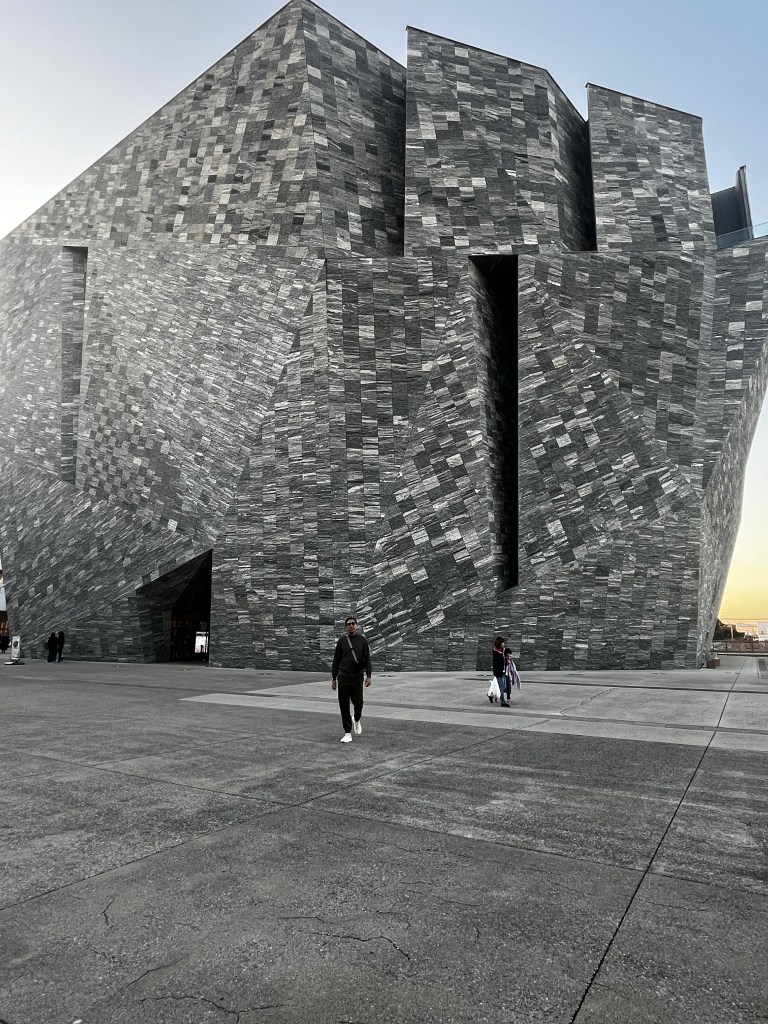
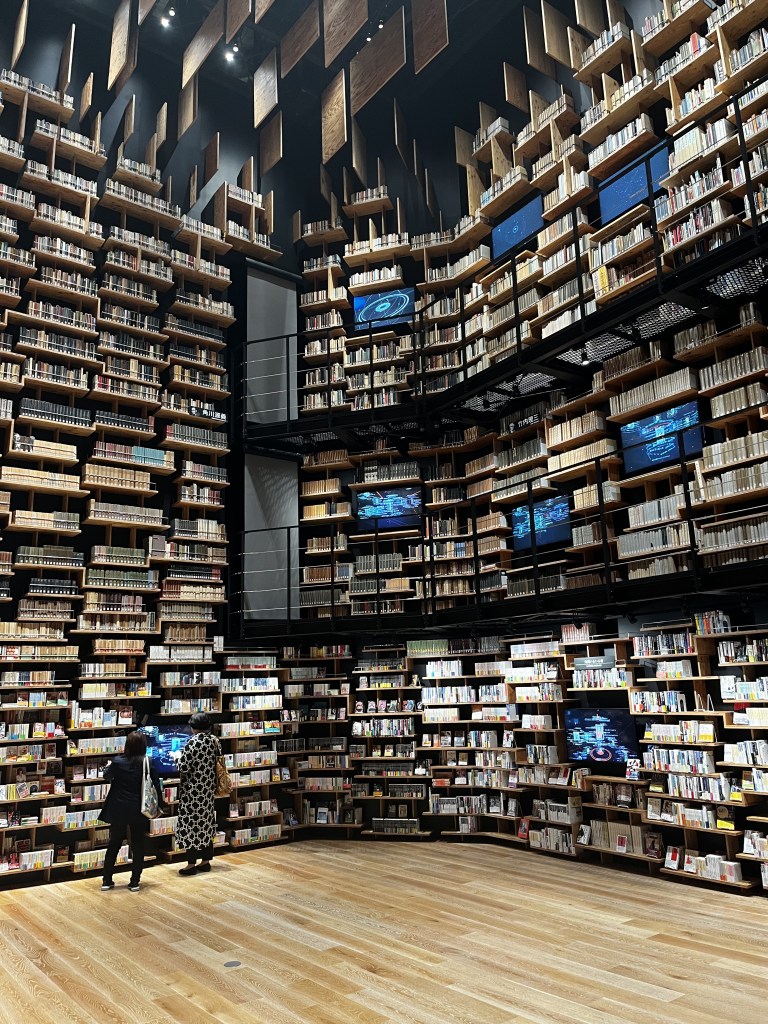
We planned to meet another group of friends who happened to be in Tokyo at the same time. The dinner place that we decided on had two outlets in Shinjuku. Unfortunately, I went to the wrong one & had to walk over ten minutes past a heavy crowd(It was indeed the most crowded place during my Japan Trip) It was an unforgettable experience in Shinjuku. Thankfully, the food was amazing.
It was a really exhausting day. We decided not to do any shopping at the Muji flagship store in Ginza, which was conveniently located in the same building as our hotel.
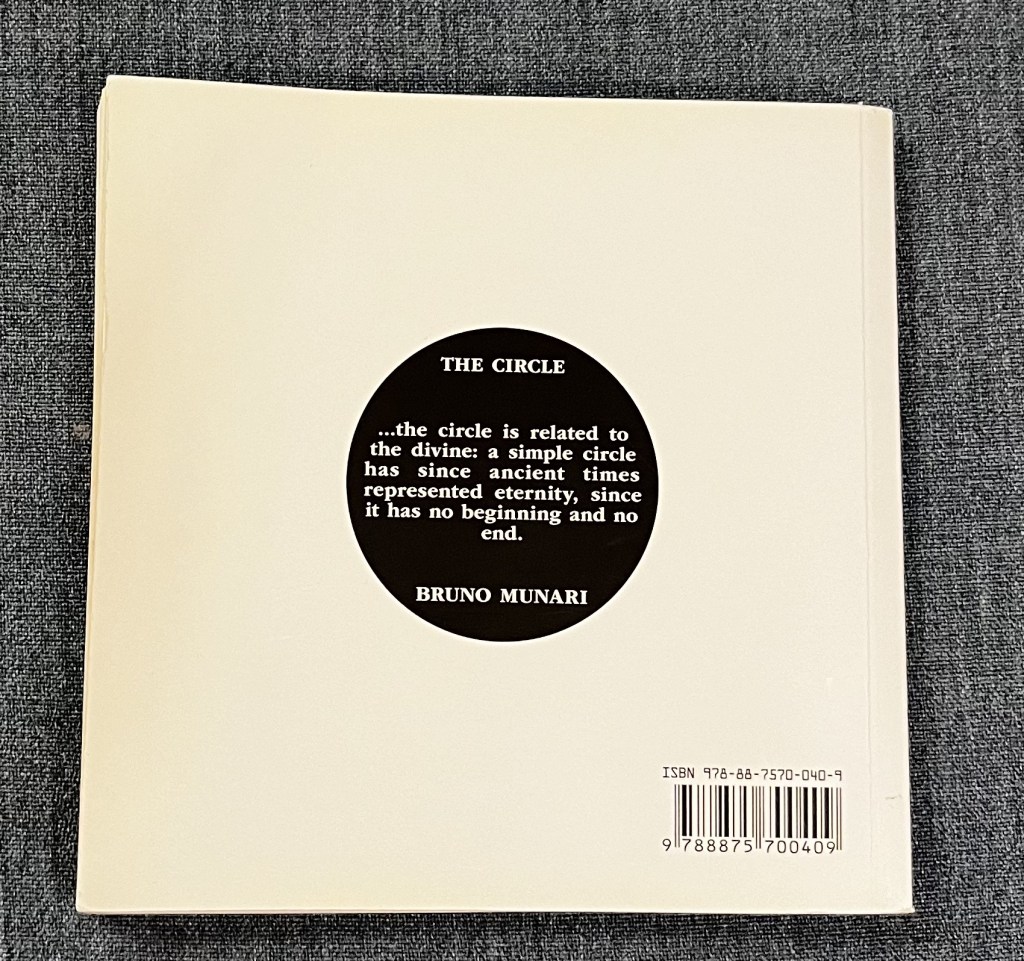
That night, in the hotel, I came across a book titled “Circle” on the shelf. It immediately caught my attention with its blend of math and art. The unique combination gave me goosebumps, and I spent some time reading the book, completely ignoring the other amenities in the room.
Day 3 completed with a grand total of 20,044 steps.
<DAY FOUR>
After a relaxing deep sleep, we felt slightly more energized. We headed down for breakfast and soaked in the atmosphere of having our first hotel breakfast in Japan. The dining area was relatively small, accommodating less than 100 people. It made sense after we noticed that the hotel had only two floors.
It was time to pack our bags & leave Tokyo to head to our next destination, Odawara, a town near Mount Fuji.
While waiting on the platform at one of the stations, I heard what I initially thought was an announcement over the PA system. To my surprise, it was a staff member from a nearby café, using a small microphone to advertise their daily specials. Her warm and welcoming tone made it sound like an AI!
This year, the snowcap on Mount Fuji came late, just a day ago. We caught a glimpse of it, but it was hard to tell as there were a few other neighboring mountains.
To be continued….
 Leap with Luqe