<DAY SEVEN>
The Shinkansen could go up to 300km/h (185 mph). Despite its speed, it felt remarkably quiet. On the inside, people rarely speak, making the journey peaceful. Before dozing off, I wondered about the wooden handles at each seat’s corners. Squinting my eyes, I noticed the braille markings on them. A few moments later, an elderly lady walked down the aisle. She gripped the handle for stability as she went to the toilet. Another simple yet thoughtful design feature with multiple purposes.
The 2-hour journey felt like a breeze. Upon exiting the train, I had to switch on my focus to navigate myself in Kyoto station. It is one of the busiest stations in Japan. Getting out of the station was a real challenge. Passengers were walking in multiple directions at a quick pace. A nightmare for introverts.
After taking a glance at my watch, I realized it was just past noon. We still had a few hours before we can check into our Airbnb. We decided to visit Nijojo Castle. It was located a few train stops away. The subway system was closely akin to Tokyo. I wondered if this design had been intentional during the planning stages decades ago.
Nijojo Castle is a historic site in Kyoto, Japan, and a UNESCO World Heritage Site. Built in 1603, it served as the residence of Tokugawa Ieyasu, the first shogun of the Edo period. The term “Shogun” is short for “Taishogun.” It refers to a military leader with the highest level of authority. This leader usually has more power than the emperor.
The weather was slightly warmer in Kyoto, so I decided to remove my jacket. We ended up circling the whole castle just to find the entrance. Luck wasn’t on our side, but it definitely made us clock more steps.
“Upon entering the castle grounds, it felt as though I had stepped into another era. The serenity of ancient architecture replaced the towering skyscrapers. Large trees took the place of the hum of cars on the roads. Though we delayed our lunch, the time spent inside the castle was worth it. Despite the crowds, the vast grounds and expansive greenery created a peaceful atmosphere. I wondered about life in the 1600s in Japan. The nation was under shogunal rule. Samurai roamed the streets. Strict social hierarchies governed daily life.
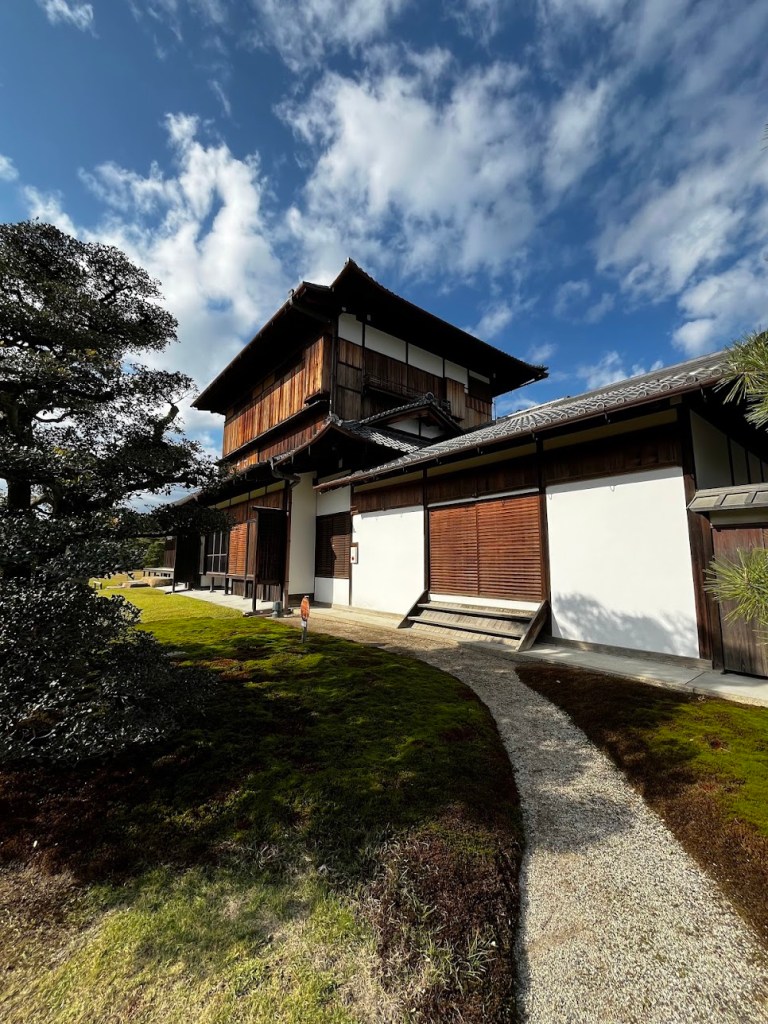
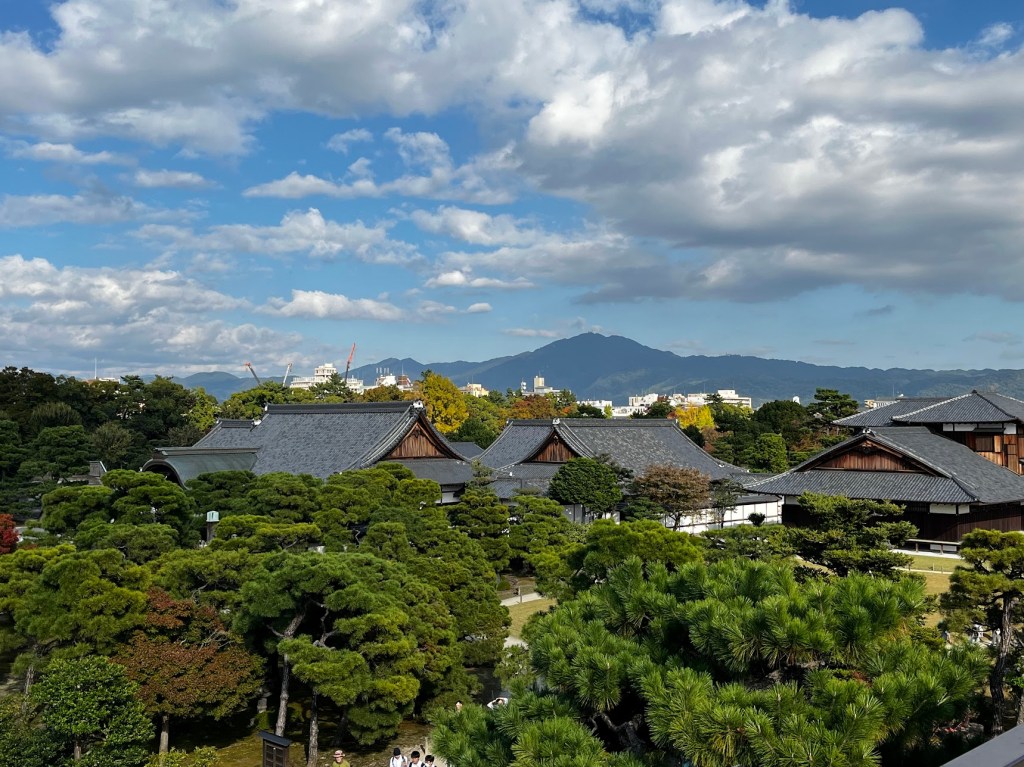
“The whole experience felt like a much-needed recharge, and we could hear our stomachs growling. We used Google Maps to locate nearby eateries but were surprised to find most of them closed. It was after 2 p.m., and many places only operated during the lunch and dinner hours. So, we settled on Mos Burger, a local fast-food chain which was available in many Asian countries.
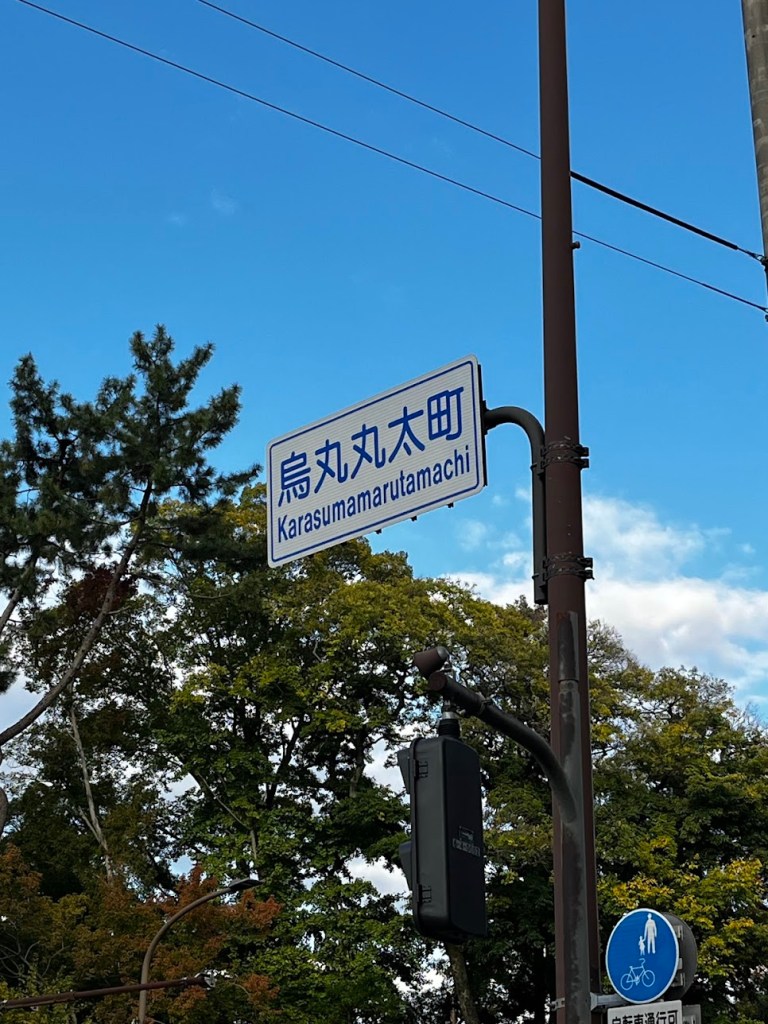
We encountered a recurring issue in Japan. The location provided by Airbnb was often inaccurate. Sometimes, it was more than a mile off. So, if you’re traveling there, make sure to confirm the address with the host a few days in advance.
Our Airbnb home was located between two train stations. It took at least 10 minutes to walk from either station. I took out my phone & booked a cab using the Go Taxi app. It didn’t take long before the driver arrived.
Just 5 minutes later, we came to a stop. To our unpleasant surprise, the cab driver stopped us a few blocks from the Airbnb. We ended up walking because the driver wasn’t able to go any further on the narrow roads.
We were greeted by the host, who had a strong European accent. I eventually narrowed it down to either Spanish or Italian. He took the time to explain the amenities in the house. It was a small, cozy home (I say this because I’m too tall for the doorways—again!). We were looking forward to using the bicycles, included with the booking. After settling in, we did another round of laundry.
That night, we went to an Izakaya stall located minutes away from our Airbnb. The streets were empty & quiet. It was an unique experience to walk on dimly lighted streets with very few people in sight.
We were greeted by an elderly woman who looked to be in her late 60s. We were the only customers in the restaurant, and upon closer inspection, we realized it was a small family business. She was the waiter, while her husband worked as the chef in the kitchen. Although she didn’t speak English, we felt warmly welcomed by her energy and kindness.
The stall had quirky decorations on the walls. I ordered rice with Saba fish, which was good. Still not ready to leave, we exchanged a glance and decided on skewers to finish. She brought them over with a smile, and each smoky bite was the perfect end to the meal.
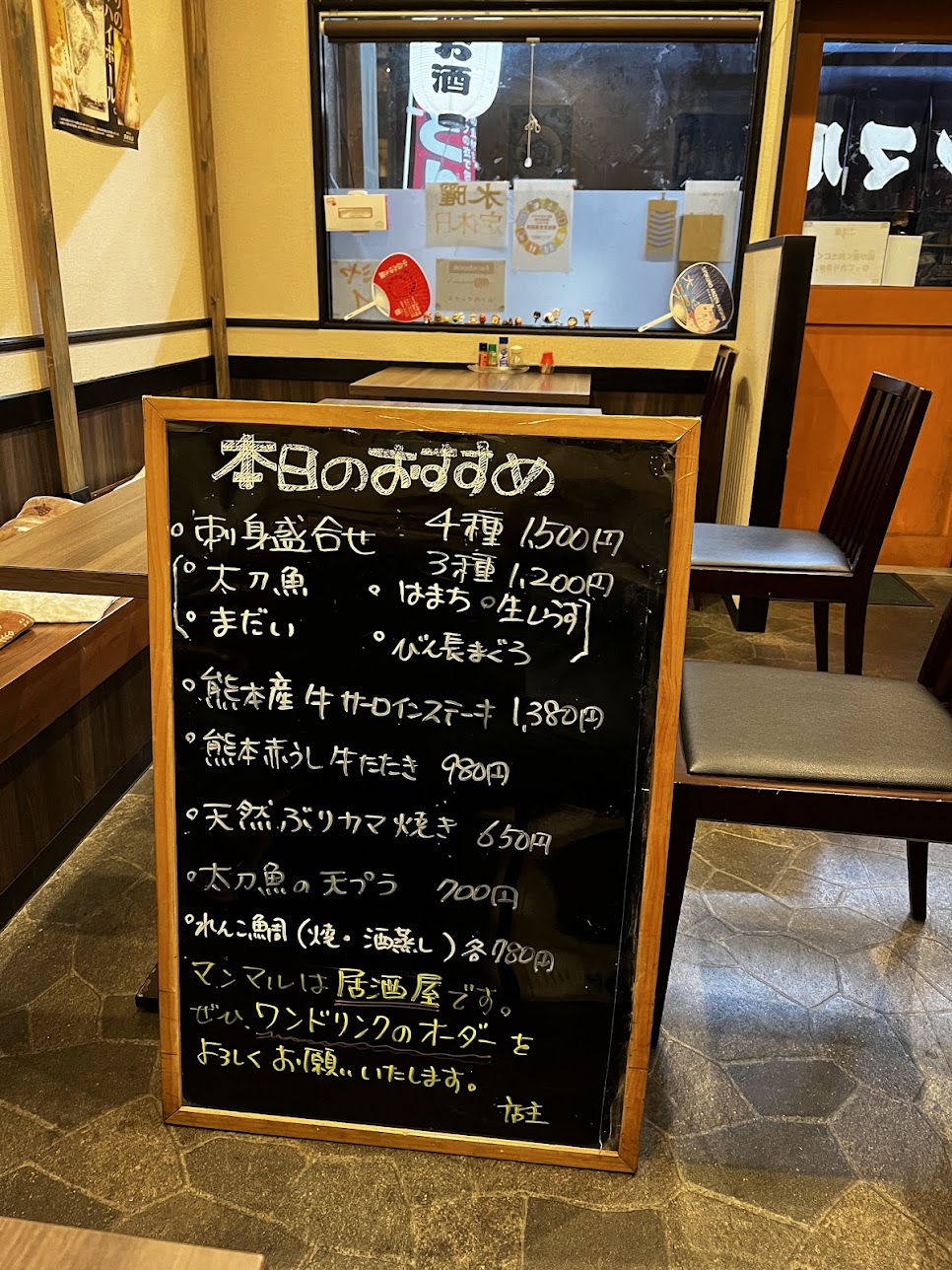
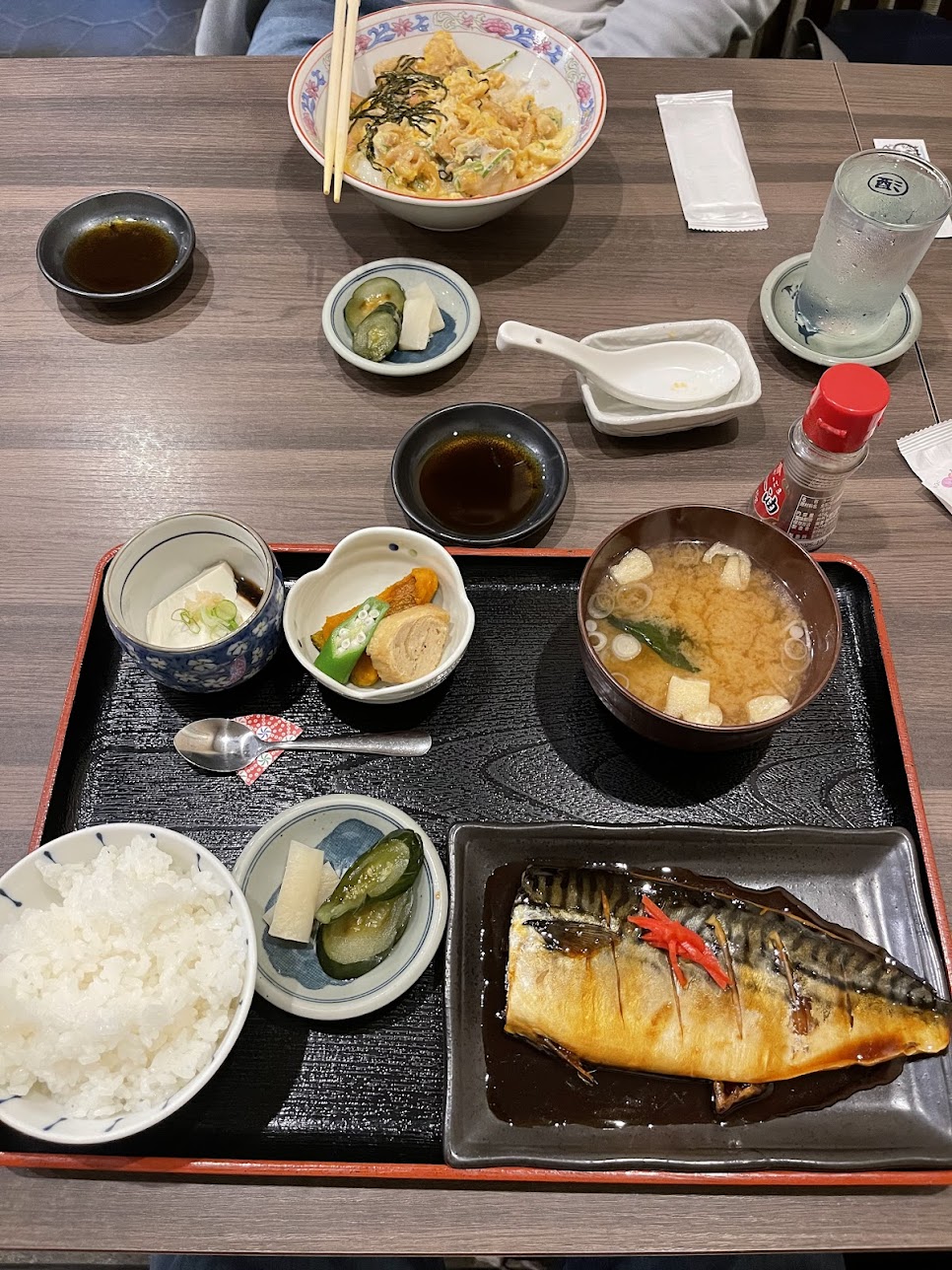
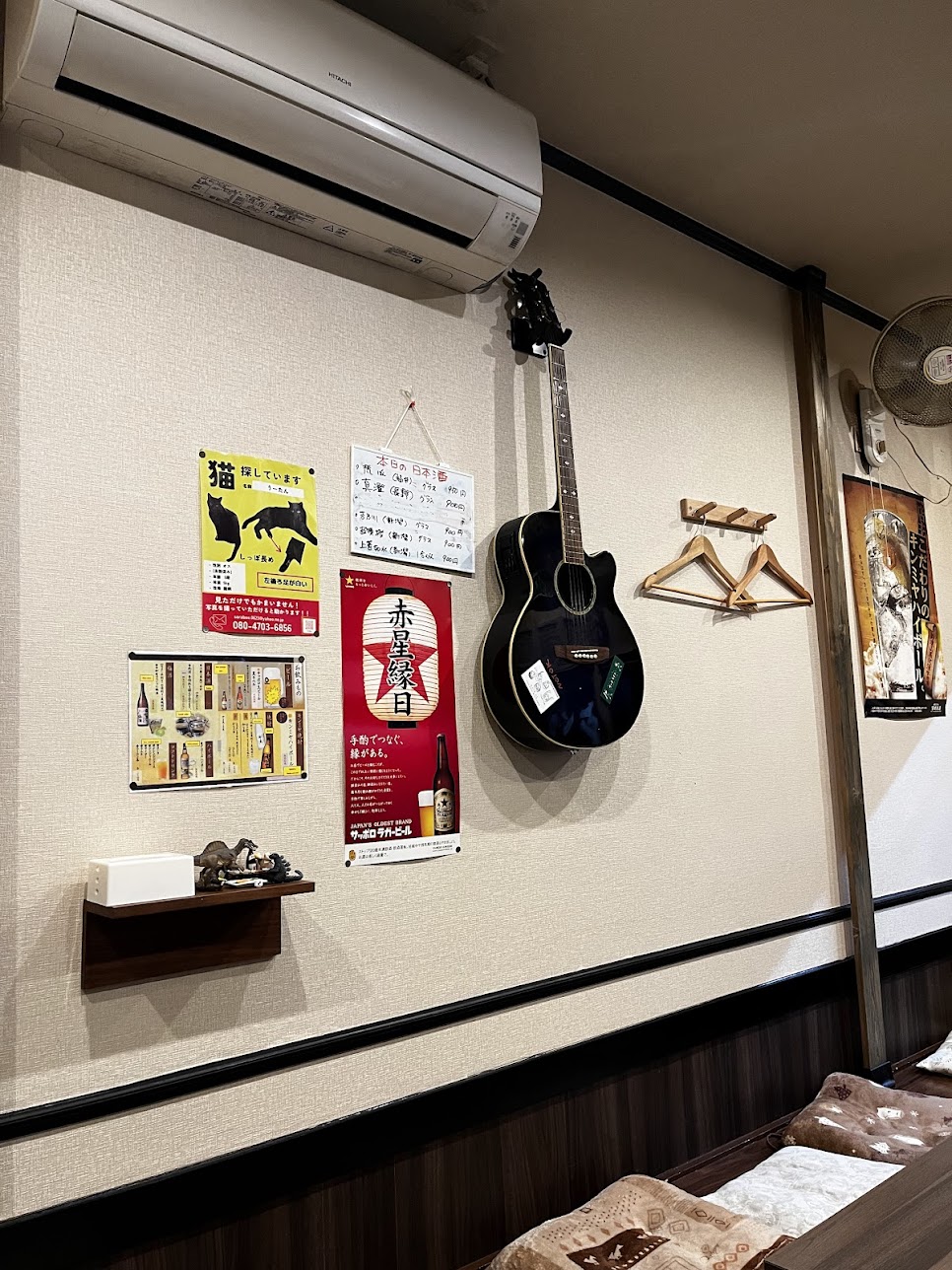
One burp led to another, signaling it was time to wrap up. At the cashier, the old lady held out the bill. I reached for my card, but she gently shook her head, saying, “Cash only.” Thankfully, I had enough cash. Her and her husband bowed gracefully, saying something in Japanese with a warm tone. Though we didn’t understand the words, their kindness was clear. It felt like they were thanking us for sharing a moment in their world.
As we stepped outside into the cool evening air, she followed closely behind. To our surprise, she held the door open and took a step outside. With deliberate care, she bowed deeply into an almost 90-degree angle. It was a gesture of respect so pure and heartfelt that it took us aback for a moment. Instinctively, we bowed back, with as much sincerity as we could muster. Then, we couldn’t contain our joy. We waved our arms in big, exaggerated motions and grinned from ear to ear. The old lady chuckled softly, her eyes glimmering with amusement, before retreating into the stall.
It was the best night in Japan so far. Not because of grandeur or extravagance, but because of its authenticity. The old lady’s kindness was unforgettable. Her graceful bow touched our hearts. The heartfelt connection we felt in that small, unassuming stall left a deeper impression than we ever expected. It reminded us that the most extraordinary moments come from the simplest human encounters.
Day 7 completed with 14,300 steps
<DAY EIGHT>
The Airbnb home felt incredibly cozy, like a snug little retreat. But with an eventful day ahead of us, we woke up early, eager to make the most of the morning. We fully utilized the well-equipped kitchen to whip up a simple breakfast, enjoying the leisurely pace of the start. For a moment, it felt like a home away from home.
The long-awaited moment had arrived. With our small backpacks, we eagerly hopped onto our bicycles, excited for the ride. Cycling was the most convenient way to Hanazono Station. We navigated through a maze of narrow streets before finally reaching the main road, which led us straight to the station. We felt like locals, cruising through the streets on our bicycles.
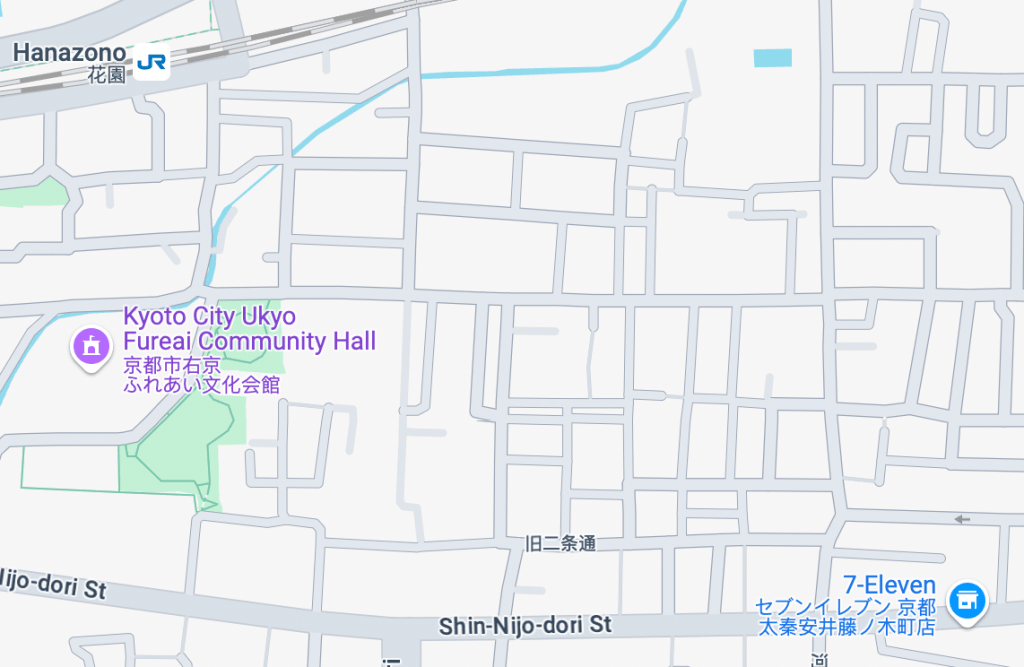
We arrived at the station and searched for a place to park our bicycles. We stumbled upon a large parking area. It was big enough to fit a hundred bikes with ease. Most bicycles come with a lock at the bottom of the seat, which secures the back wheel in place. The lock is activated and released using a small key.
After a short train ride, we alighted at Fushimi Inari Station, eager to explore the famous shrine. Little did we know, this would turn into the longest hike of our trip. As we walked towards the iconic torii gates, the path ahead stretched far longer than we expected. It wound uphill through countless gates.
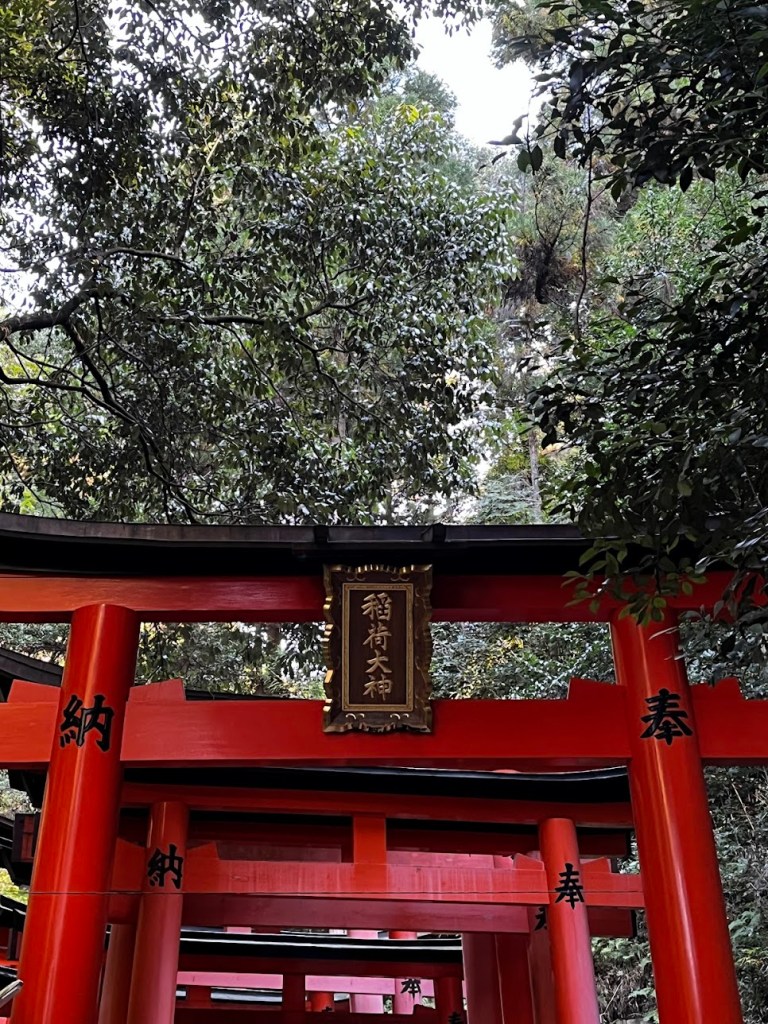
Over an hour later, we reached the peak of Mount Inari, feeling accomplished and at peace. It was a pleasant surprise to witness a young child make it to the top with his family. It was something we can do to raise a child—instilling in them the love of nature, exploration, and perseverance.

Throughout the hike, there was no trash in sight, yet another testament to the respect the local community had for their surroundings. We decided to take a short rest at a small cafe overlooking the landscape below. The café had a cozy charm, with short wooden tables and cushion. As we sat down, the calming ambiance of the place wrapped around us. We ordered a hot cup of hojicha (roasted green tea) to rejuvenate after the hike.
We felt adventurous, so we hiked off the beaten path, veering away from the trail. Along the way, we encountered only a few others, making our journey feel even more serene. Eventually, we found ourselves at a temple(I don’t remember the name) nestled within a local neighborhood, a peaceful spot far from the usual crowds.
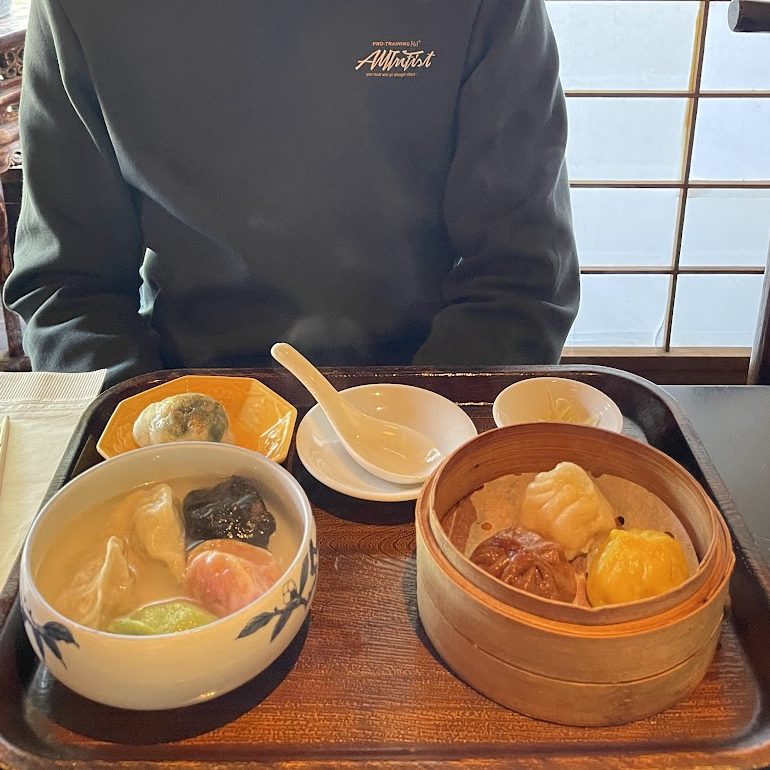
By this point, we needed a substantial meal to refuel as the hike had left us both exhausted and hungry. We took the train to Kamo River, hoping to find a place to relax and eat. After wandering around for a bit, we stumbled upon a Chinese restaurant in an old building. It looked empty at first, but we were escorted upstairs to the dining area. The place had a rustic charm, with décor that made it feel like we had been transported to ancient China. The menu was extensive, and we decided to order set meals along with colorful dumplings in various hues.
We had an hour to spare before our geisha tour. Teramachi Shopping Street was just a few streets away. It is a bustling and lively area filled with an array of shops, boutiques, and traditional stores.
We were excited for our cultural experience with Minori-san, our tour guide. We made sure to be on time. Punctuality is highly valued in Japan. The meeting point was at the statue of Izumo-no-Okuni, the founder of Kabuki Theater.
It was easy to spot Minori as we crossed the bridge. She was dressed in a stunning traditional kimono, its warm colors and intricate patterns reflecting the elegance of ancient Japan. Her hair was styled neatly, making her look elegant.
For the next hour, we roamed around the geisha district in Gion, learning about its rich history and cultural practices. Minori, our tour guide, was incredibly knowledgeable and spoke excellent English, offering detailed insights into the traditions of the geisha community.
Our curiosity was sustained, as Minori had answers to all the questions we had along the way. She patiently explained each aspect of the geisha culture. She described their training and daily lives. She ensured we understood the depth and beauty of their traditions. Her enthusiasm and knowledge made the experience even more enriching.
We stopped by a few geisha boarding houses along the way. Wooden boards displayed the names of geisha under apprenticeship. These boards showcased the young women training to become maiko, a key step in the path to becoming full-fledged geisha. The atmosphere felt serene, it felt like a glimpse into living history.
Before heading to Yasaka Shrine, we stumbled upon a charming souvenir shop selling Yatsuhashi, Kyoto’s famous delicacy. It felt like fate, as just moments before, I had been asking Minori about it. The timing couldn’t have been more perfect, and I couldn’t help but smile at how the universe seemed to align. The kind lady at the store offered us samples to try. She also shared the story behind Yatsuhashi and its distinct flavors. We decided to buy two boxes to bring home. The sweet, cinnamon-infused taste was unlike anything we had tried before.
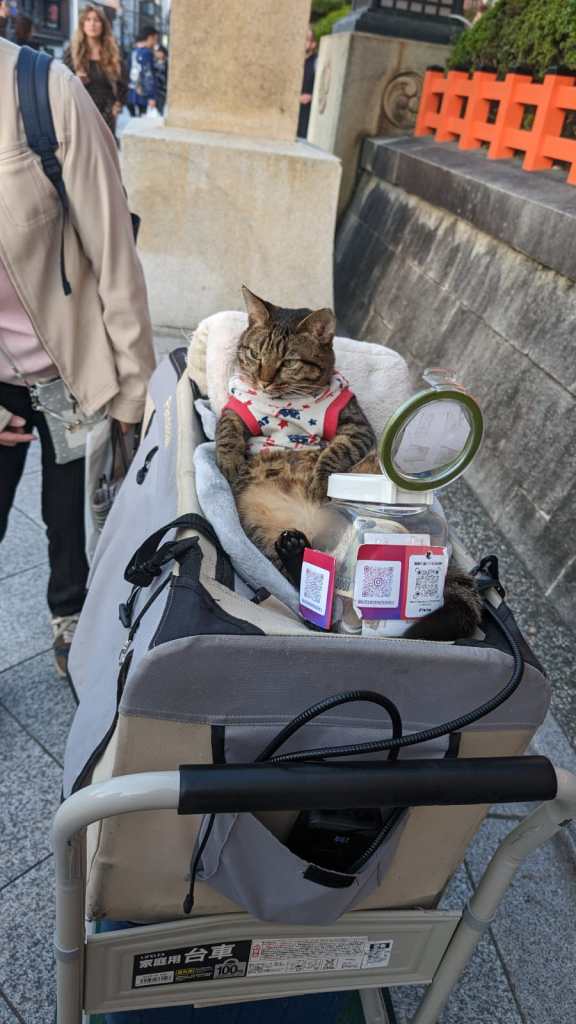
Just outside Yasaka Shrine, we noticed an old man with a plump cat lounging on its back. The cat seemed perfectly at ease, and the man was making a small profit by offering tourists the chance to take photos with it. I helped Minori take a photo with the cat, as curious onlookers gathered with their amused faces reflecting the unexpected charm of the moment
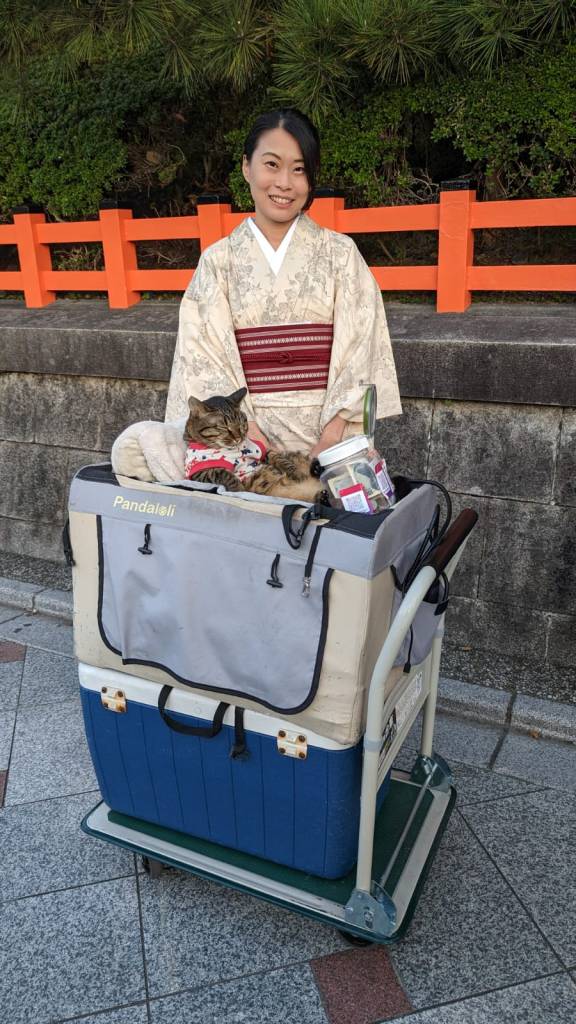
After showing us around, Minori-san graciously walked us back to the station. Our conversation was enriching, as we discussed the cultural differences between Japan and Singapore, exchanging insights and stories. The last hour was truly memorable, and I am deeply grateful for this short yet meaningful experience with Minori-san. Dear Minori-san, if you’re reading this, またね(until we meet again).
We headed back to Hanozono station to pick up our bikes. We then cycled to a department store nearby for dinner & groceries.
Our Airbnb host, Susan, suggested we visit the cat shelter just down the same alley as us. It was home to a collection of rescue cats, each with its own unique story(it’s called Maneki Machiya, if you’re interested)
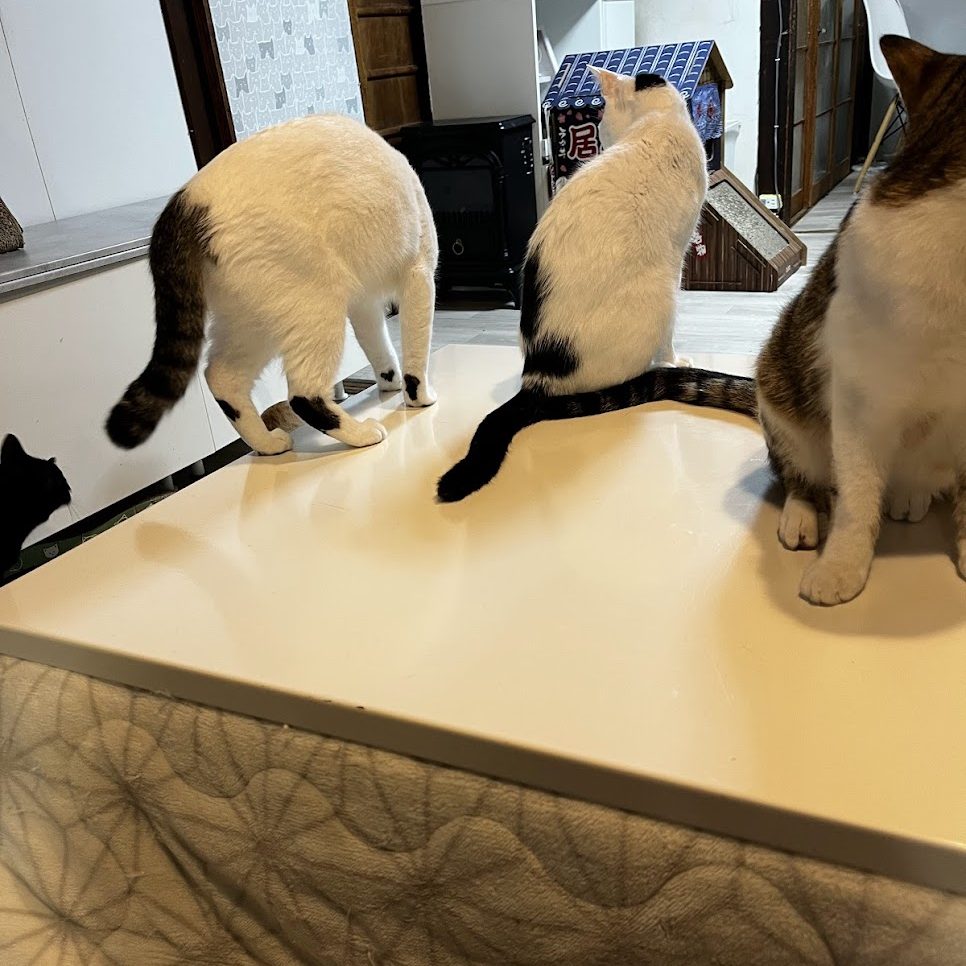
Lounging with the cats and enjoying their gentle company was the perfect way to end our day of “Miles & Memories.” Their playful antics provided a peaceful end to our day.
Day 8 completed with 21,800 steps
<DAY NINE>
After another round of breakfast, we spent the morning packing our bags. We had to check out in the afternoon for Osaka. So, we stored our bags near the entrance of the home.
After a 15-minute stroll to Hanazono Station, we boarded the train for Saga-Arashiyama Station, just two stops away.
Arashiyama Bamboo Forest is an iconic place in Kyoto. It is filled with tall bamboo stalks. It serves as a canvas of natural beauty for photographers. The bamboo groves in Arashiyama were initially planted centuries ago, during the Heian Period (794–1185). The area was a popular retreat for nobles, who sought solace in its tranquil environment.
The path to the forest was lined with pop-up stalls selling snacks and souvenirs. When we arrived, the forest was crowded with tourists, making it feel slightly overwhelming. Capturing a photo was rather tricky.
After walking to the other end, we found a less crowded area to take photos in.
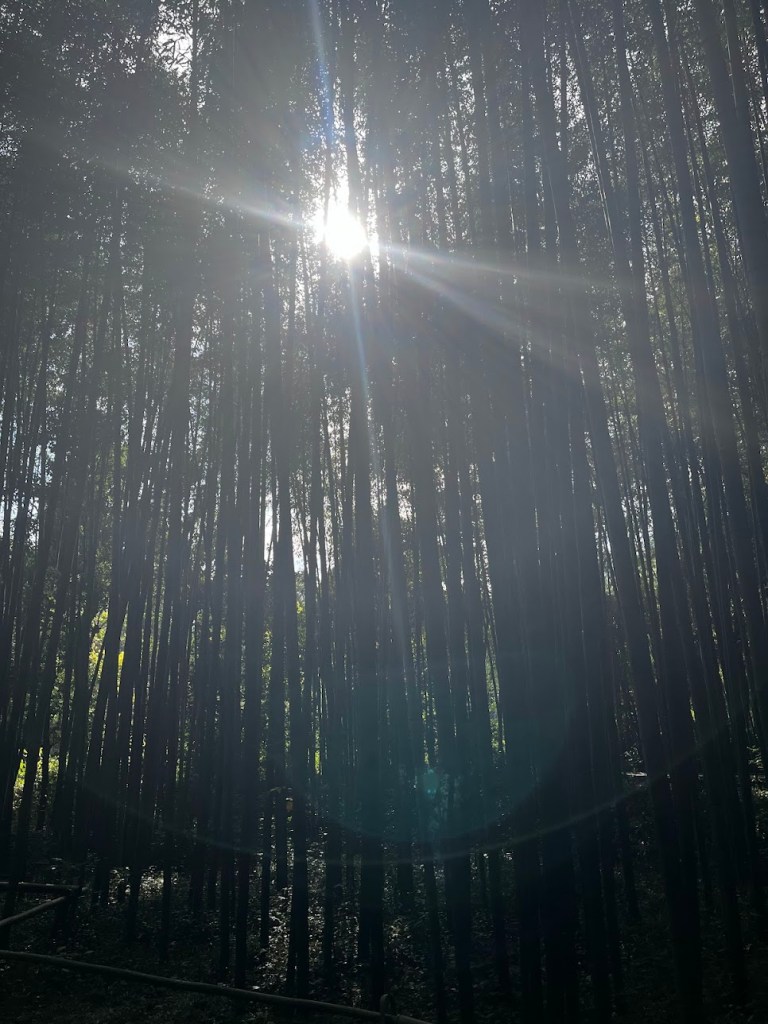
There was a small rest area with toilets and snacks. We saw a group of young men. They were dressed in kimonos. They were speaking with the stall owner selling baked sweet potatoes. They appeared to be tourists from South America. The men took turns posing for photos with the stall owner and seemed genuinely curious and engaged.
After browsing around the stalls, we decided to buy the Hanami Dango. It’s made with mochi rice flour, shaped into balls, and served on skewers. They typically come in three colors: pink, white, and green. As I took a bite, I was suddenly hit with a flashback. This very treat was an item in Maplestory, the game I spent countless hours on during my early teens. It was a nostalgic moment that reminded me of my childhood.

As we left the forest, we passed a souvenir shop by the road. One item caught my eye, it was a cup made from actual bamboo. I didn’t hesitate and bought it right away. Thankfully, nothing else caught my interest, so it was the only thing I bought from the Bamboo Forest.
We found ourselves in a ramen shop near Hanozono Station an hour later. We planned to have lunch before picking up our bags. To our surprise, the shop’s vending machine only accepted cash. We only had a total of 1000 yen, enough for just 1 person. It was an awkward moment as we had to apologize to the staff and leave abruptly. After visiting a few banks, we finally found a machine that accepted foreign cards. By then, we were quite a distance from the original spot, so we had to find another place to eat.
Tip: Always carry cash with you. Know where to find a bank for withdrawals. Many vendors in Kyoto only accept cash.
We picked up our bags and thanked the staff at Maneki Machiya for their warmth and hospitality. This time, we walked a short distance. Then we booked a cab to Emmachi Station. We were ready for the next leg of our journey.
A few stops later, we arrived to the extremely crowded Kyoto station. I went to the ticket counter & purchased the earliest ticket to Osaka, which was 2 hours later. Inside the station, a lady in white caught my attention. Her name was Arisa, and she had a gentle demeanor that instantly put you at ease. She spoke with a calm, soothing voice. She could answer a variety of questions, covering directions. She also provided recommendations on where to eat or visit in Kyoto. (Spoiler alert: She is a humanoid that uses A.I to interact with others)
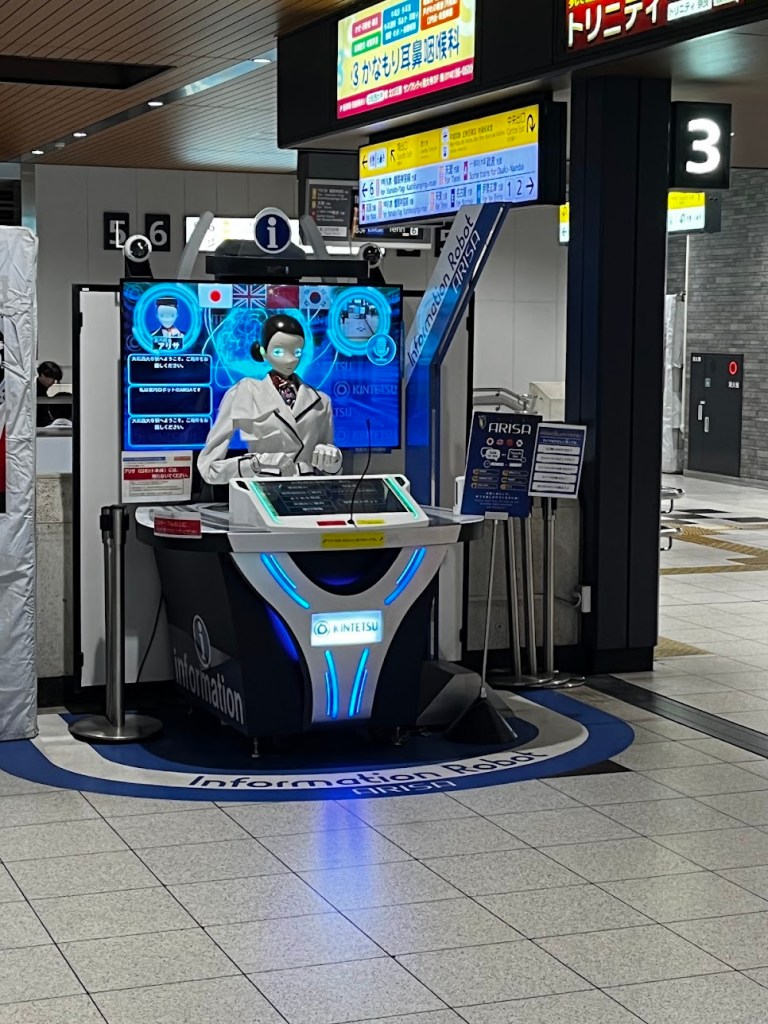
We went to the luggage locker to store our bags. Then, we headed to Ogawa, a coffee shop located at the basement of an adjacent subway building. I felt slightly flustered after spending most of the day in crowds. I disconnected from the world with a cup of hot chocolate and noise-canceling AirPods. Slowing down felt refreshing. It was a quick escape to recalibrate my thoughts. It instilled a sense of gratitude for having made it this far.
Kyoto is such an interesting city. The crowds are concentrated around the popular tourist spots and stations, but everywhere else feels calm and peaceful. I’d definitely love to visit again and explore more of what it has to offer.
~End of Chapter Three
 Leap with Luqe