Part One: Chengdu Adventure: Pandas, Tea, and Sichuan Opera
In 2011, I took my first-ever flight to Guangzhou, China. Fourteen years later, history repeated itself. This time, I flew to Chengdu, also known as the panda city.
Chengdu is located in Sichuan Province, famous for its spicy cuisine.
Most mainstream social media apps, like Instagram, Google, and Facebook, are banned in China. Fortunately, we purchased an eSIM that works in China to access those apps. Additionally, we had to download local apps for our trip.
Must-Have Apps for China
- AliPay
- Amap
- Dianping

I’ve been using “we” a few times because this isn’t a solo trip. I’m traveling with my wife, Elise, who is making her debut on this blog. We tied the knot last month and sneaked in this trip before our wedding banquet in April. Not the honeymoon yet, but our first adventure as a married duo.
Day 0: Arrival in Chengdu
Chengdu is located in southwest China. The main reason we chose this city was the pandas. China operates on a single standard time zone, so there was no need to adjust our clocks.
After a five-hour flight, we arrived in Chengdu. It was nine in the evening, and the temperature was around eight degrees Celsius. Once we collected our luggage, I realized I had not packed a jacket in my carry-on. It was all in the suitcases. Thankfully, it was only a slight discomfort before arriving at the hotel.
The room was spacious. The biggest surprise was the bathroom. It was large enough to fit a king-size bed and a dining table.
There was a Chinese version of Alexa called Xiaodu. She is an AI assistant from Baidu, China’s search engine. My wife, fluent in Mandarin, could easily boss Xiaodu around. I tried as well. It was nice that Xiaodu understood me. Nonetheless, my wife still had the ultimate access rights.
Day 1: Pandas and Scenic Adventures
We hired a driver. He took us to different attractions. We started with the Chengdu Research Base of Giant Panda Breeding (成都大熊猫繁育研究基地).
We arrived at 8 a.m., just in time to catch the pandas at their most playful. The line at the ticket counter looked intimidating, but it moved faster than we expected. We were buzzing with excitement to finally see this adorable species that was once on the brink of extinction.
Inside, we followed a group of tourists and soon spotted a crowd gathering near an enclosure. That was the first of many pandas we would encounter that day. As we ventured further, the crowds grew. Yet, we still spotted a panda climbing a tree. This moment made everyone stop and stare.
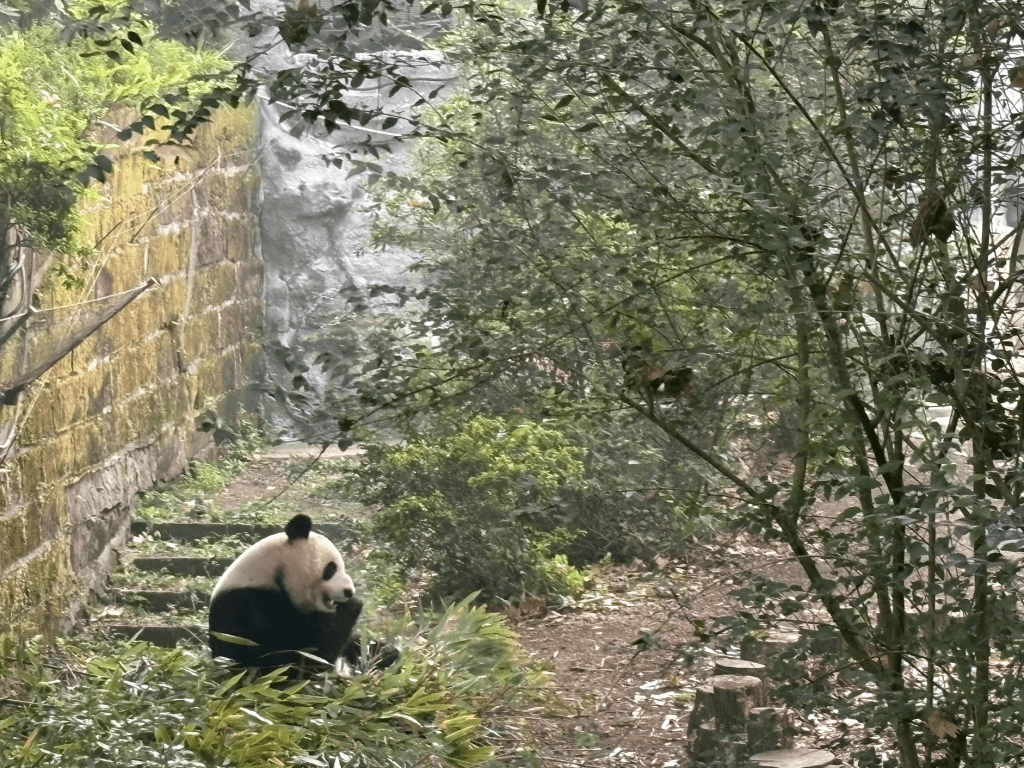
The research base was much larger than we imagined, and we ended up spending almost four hours exploring. Along the way, we also spotted the equally adorable red pandas. Each panda had its own name, with signs detailing their unique traits and personalities, making them feel relatable.
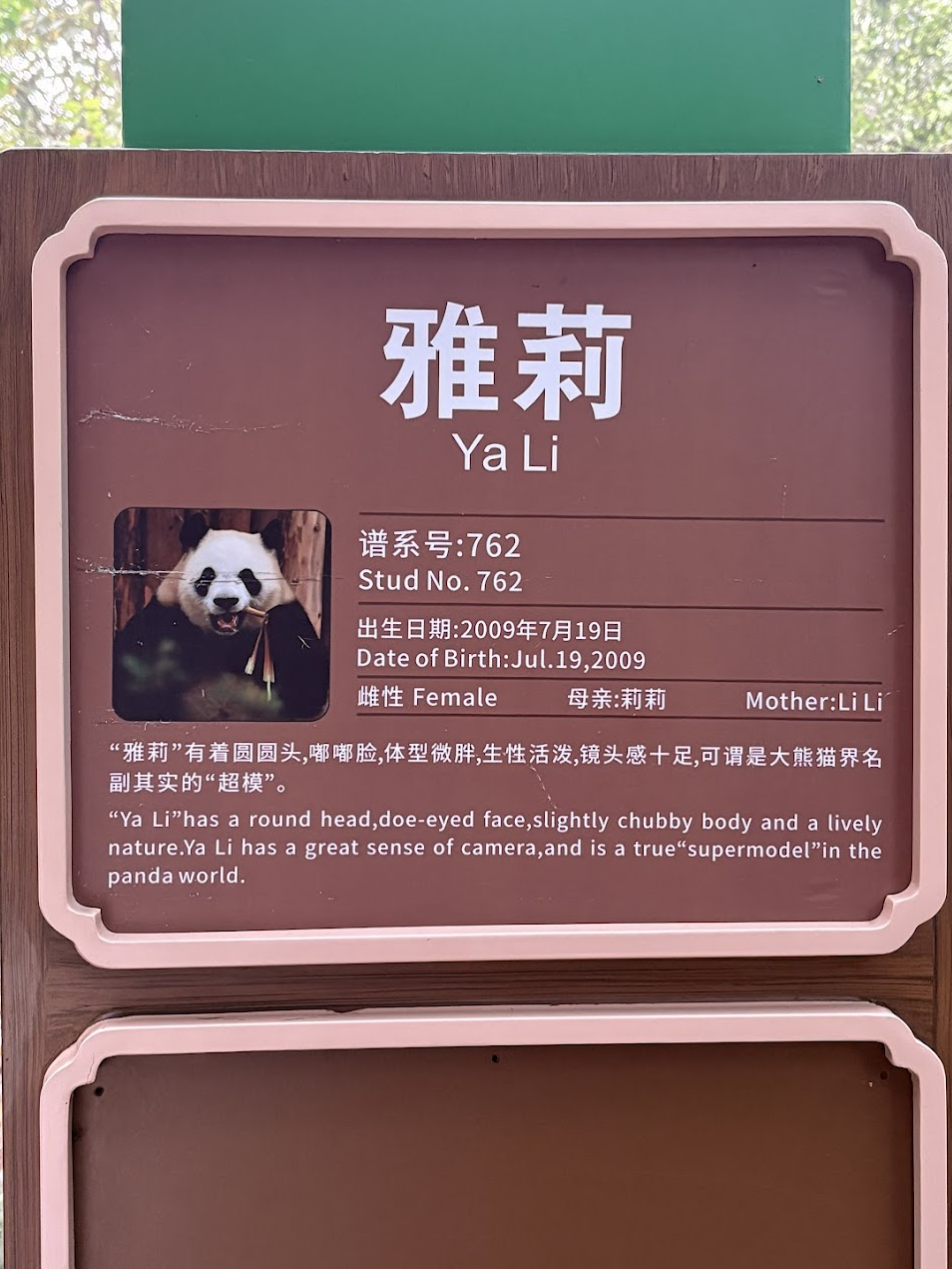
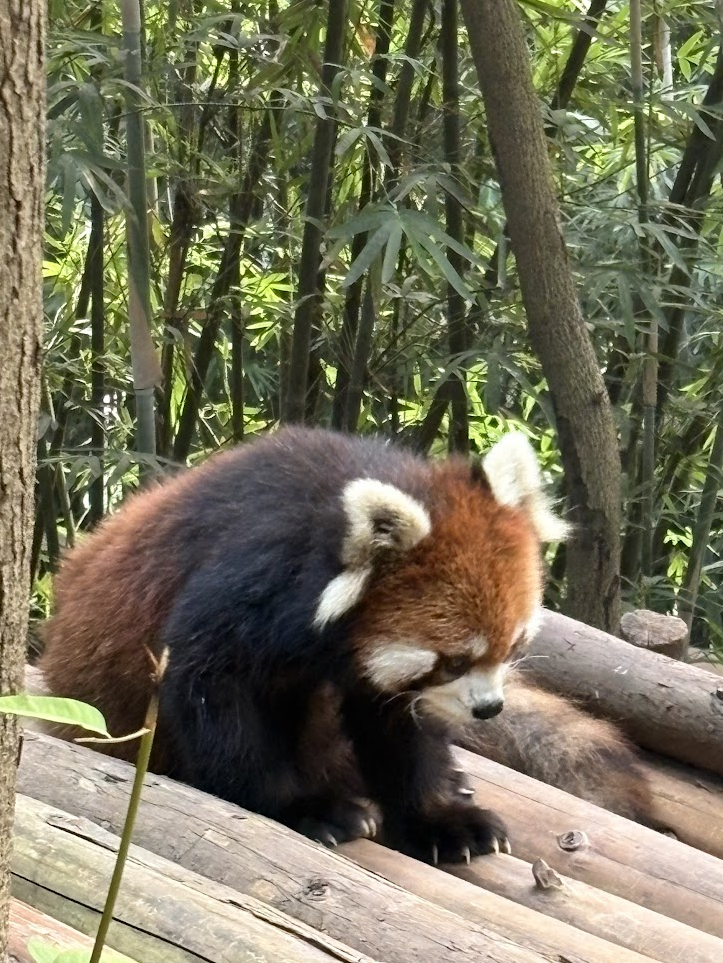
We also visited the panda museum, where we learned about their fascinating history. Once endangered, a dedicated team of scientists worked tirelessly to save the species. They found ways to encourage pandas to reproduce. This was a difficult task given their clumsy nature and apparent lack of interest in romance. The main goal of the research base is to increase their population and eventually release some back into the wild.
As we walked back to the pickup point, the street outside was lined with vendors selling panda-themed souvenirs. Our next stop was the Dujiangyan Scenic Area, and we were planning to grab lunch along the way. Elise casually asked our driver for recommendations. Soon, we took a small detour off the main road into a quiet alley.
The restaurant we ended up at looked cozy but overpriced. The lady attending us quoted 200 to 300 yuan, about S$50, for a whole fish or chicken. Alarm bells rang immediately, and we suspected the driver was in on the setup. After a few rounds of awkward negotiations, we politely declined and walked away. Later, we learned the driver’s own meal was just rice and vegetables. It cost only 15 yuan, about S$3. This made the whole setup feel even more fishy, pun intended.
After a 15-minute ride, we arrived at the Dujiangyan Scenic Area. It is famous for its 2,200-year-old irrigation system. Li Bing and his son built this system. They managed to design canals and spillways to control flooding without using a dam. This innovation allowed them to irrigate the Chengdu Plain, turning it into the “Land of Abundance.”
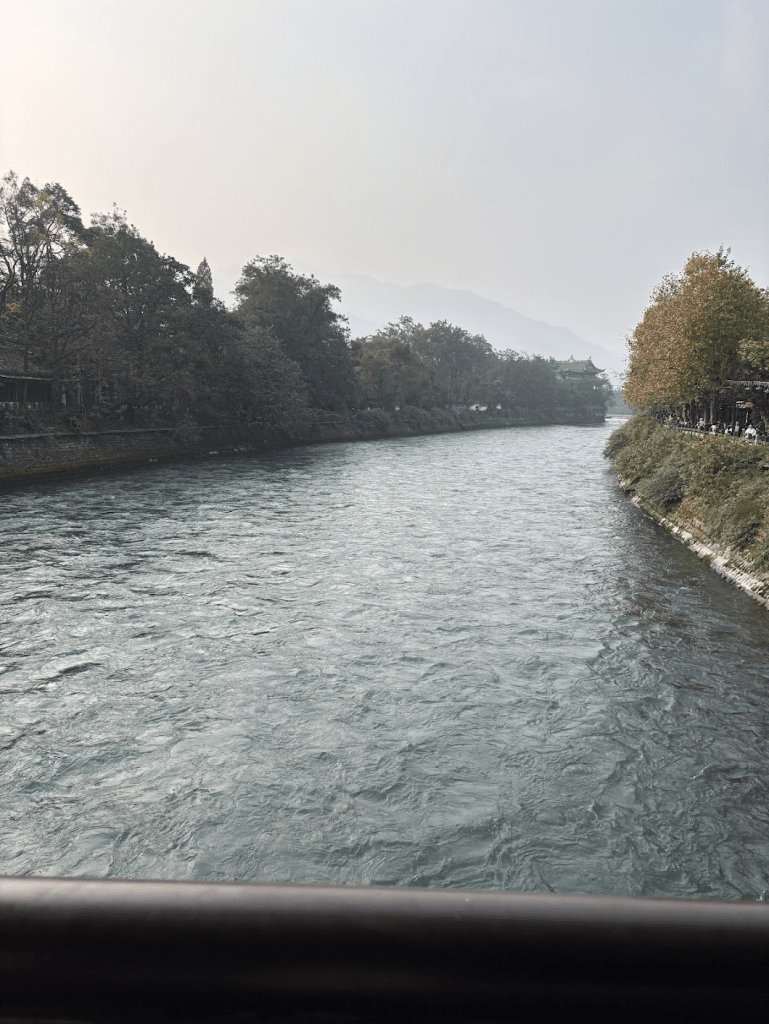
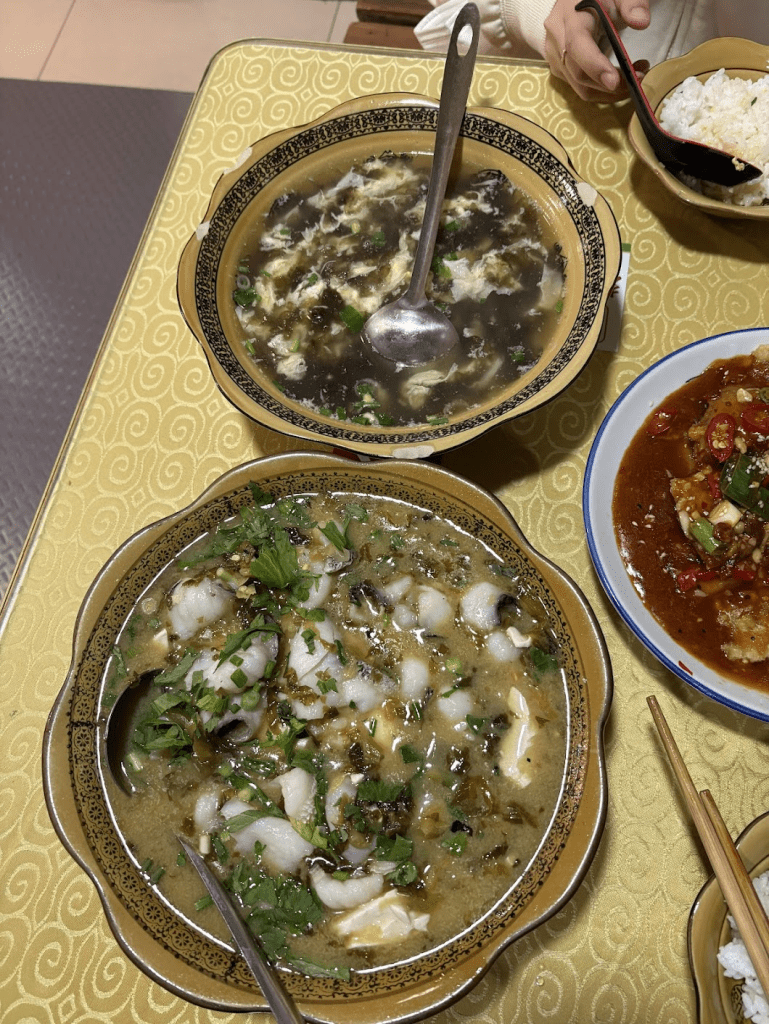
We headed to a local restaurant. We spent under 200 yuan for a huge meal. The meal consisted of Sauerkraut Fish, Scrambled Eggs, Sautéed Vegetables, and Egg Drop Soup.
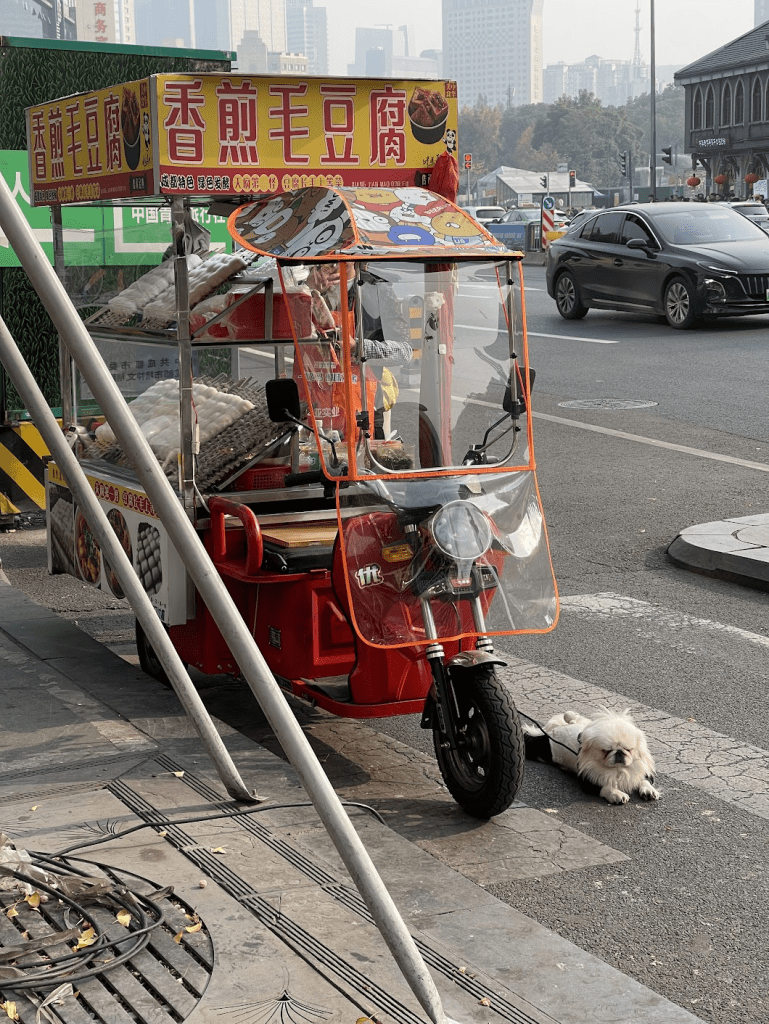
After exploring Dujiangyan, we stumbled across a small stall offering durian (榴莲, liú lián) grilled custard. As a fan of adventurous flavors, I couldn’t resist giving it a try. Sadly, it was a bit of a disappointment. The flavor felt muted and underwhelming. I will stick to durian back home in Singapore and Malaysia.
That night, we went shopping at Uniqlo to stock up on thermal wear for the next leg of our trip. I picked up cashmere Heattech innerwear. It felt soft and warm. It proved to be a game-changer for the next province of our trip.
Day One completed with 16,800 steps.
Day 2: Breakfast Robots, Kuanzhai Alley & Sichuan Opera
In China, Dianping is one of the most popular food delivery apps. We decided to order breakfast and were not disappointed.
Our typical Chinese breakfast included:
- Soy milk (豆浆, dòu jiāng)
- Pumpkin porridge (南瓜粥, nán guā zhōu)
- Fried dough sticks (油条, yóu tiáo)
- Steamed buns (馒头, mán tou)
- Sichuan pickles (泡菜, pào cài)
The delivery came in the most unexpected way. A robot with a cute panda face rolled up to our room and placed the food inside a small compartment. For a moment, we just stood there laughing. Who knew breakfast would come with wheels?
Later, we had a chaotic elevator ride. A group of local tourists filled the lift, conversations erupted in every corner, and the doors repeatedly bounced open. After a few dramatic adjustments, two men were literally pushed out. When the doors finally closed, we were relieved. It felt like a noisy parallel universe for a few minutes. Reaching the lobby in silence felt like a blessing.
We booked a Didi to Kuanzhai Alley and were surprised by the low fares compared to Singapore.
After exploring the courtyards, which closely resemble those from the Qing dynasty, we realized there are three alleys:
- Kuan Alley – Famous for its traditional tea houses and serene courtyard atmosphere
- Zhai Alley – Home to boutique shops, cozy cafes, and restaurants
- Jing Alley – Known for its lively, modern nightlife
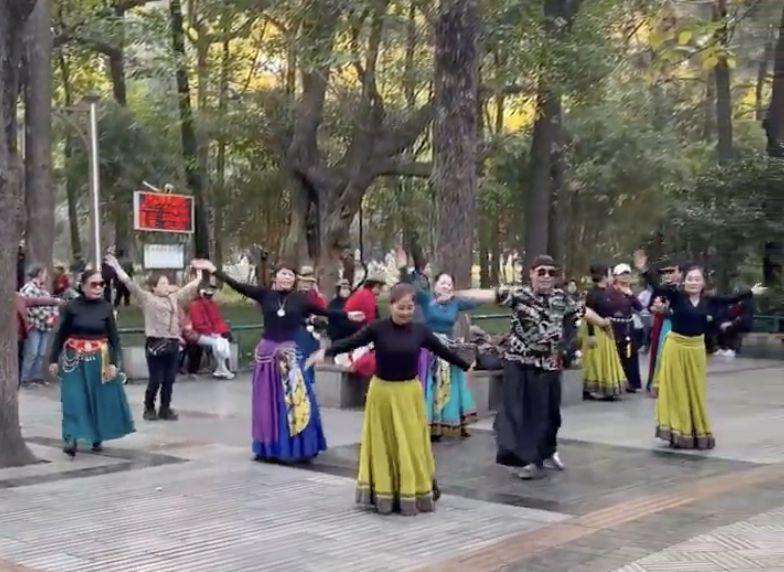
After lunch, we wandered to People’s Park (人民公园). It was buzzing with energy as retired seniors performed songs and dances. The teahouses were packed, leaving us to enjoy only their aroma.
We came across a pop-up stall selling different types of tea leaves. Two girls handed out free samples, so we gave it a try. We asked for the non-caffeinated version consisting of dried fruits. It was 1.2 yuan per gram. At first, that didn’t sound expensive, but I miscalculated and almost paid for it.
Me: Can I buy any amount?
Her: Yes, you can.
Me: I’ll take 100 grams then.
Her: Okay. (shows me the weighing scale)
That’s when I realized 100 grams would cost 120 yuan, about $20. I decided to walk away.
Her: We can give you 100 grams free if you buy 500 grams.
Me: Wo bu yao (我不要) — I don’t want.
We almost fell for a tourist trap.
Later that evening, Elise surprised me with tickets to a Sichuan Opera performance. I had no idea what to expect, but the surprise made me even more excited.
It was only five in the afternoon, and the sun was starting to set. We grabbed a quick meal before heading to the Sichuan Opera Theater. Arriving early, we collected our tickets and were invited to enjoy some tea in the basement before the show. We relaxed and sipped the warm tea while watching other guests arrive.
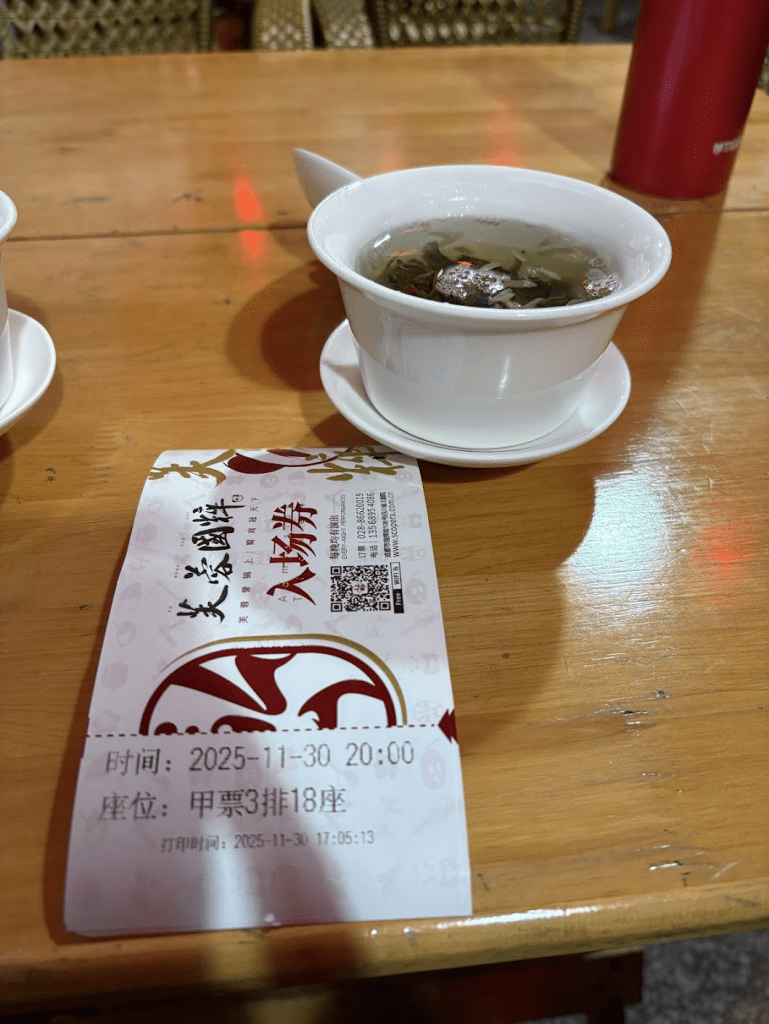
As it approached 8 p.m., the theater was almost full. We found seats in the third row. They were not the best in the house, but good enough to see the action clearly. The packed theater added to the excitement. I could feel the energy building.
The performance was about to begin.
The main segment was the face-changing performance. In the blink of an eye, the actors’ masks changed from one expression to another. Sometimes, they changed multiple times in a single gesture.
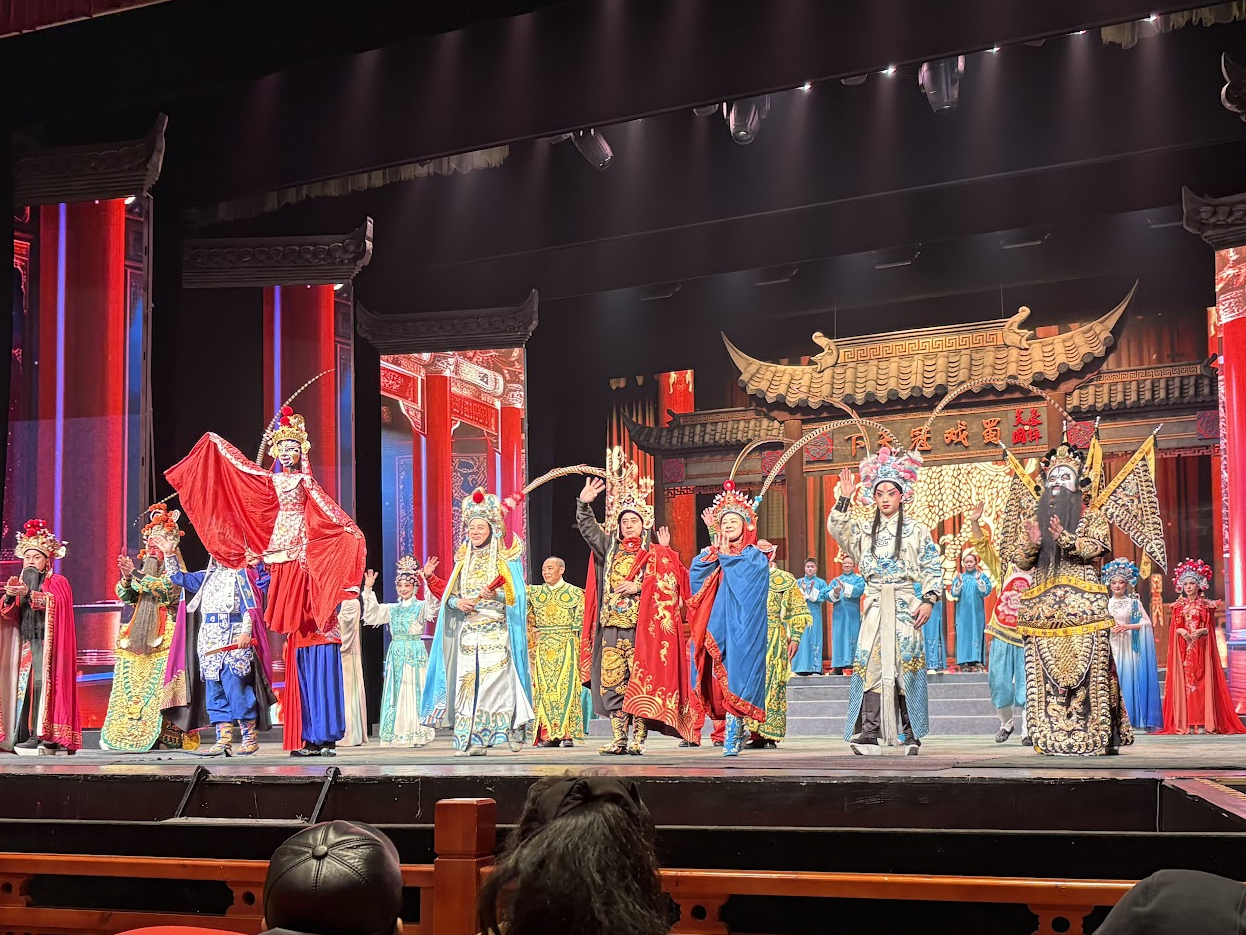
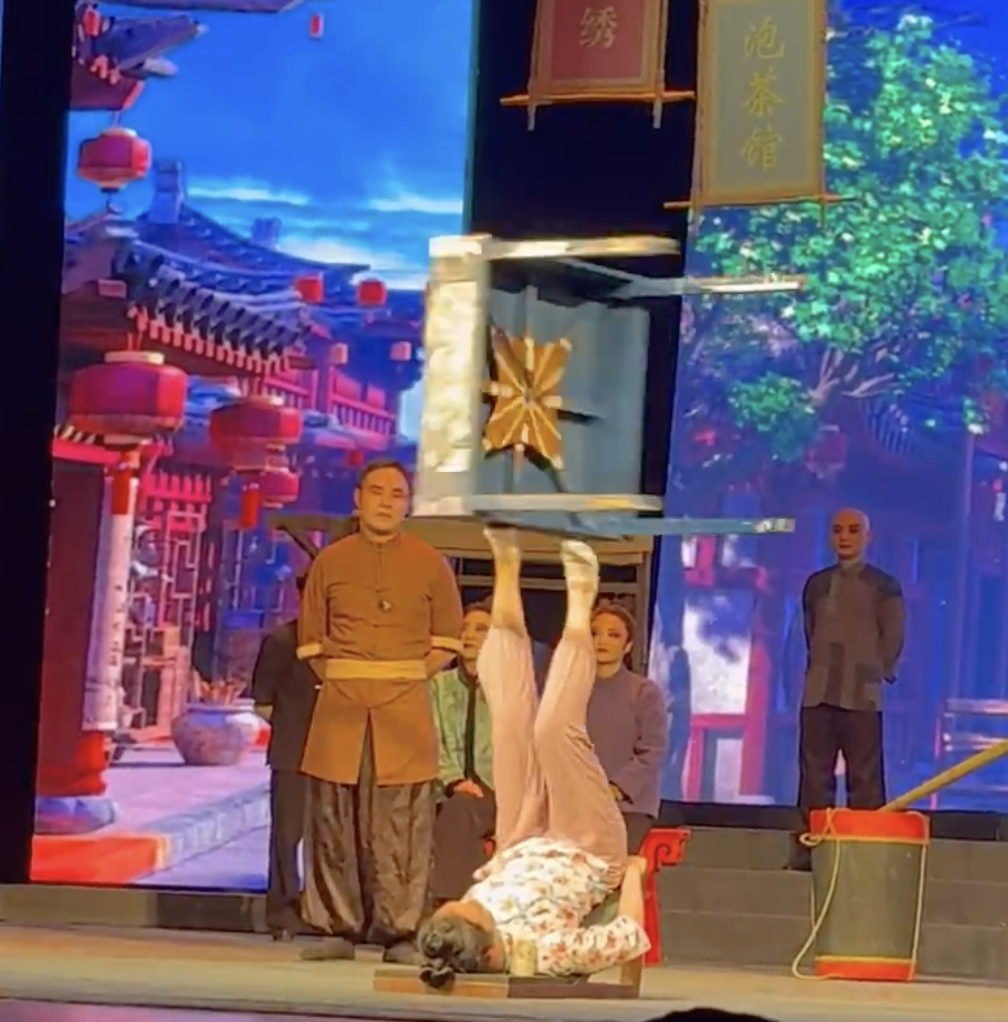
Other highlights included a hilarious comedic act performed by a couple using a teapot and a candle. Their timing was impeccable. Another unforgettable moment was a female performer spinning a table using only her legs. The crowd watched in awe, and I couldn’t help but marvel at the talent and dedication of the performers.
The entire performance lasted about ninety minutes, and I’m so glad I got to experience it. It was definitely a highlight of our time in Chengdu, made even more special thanks to my wife, Elise.
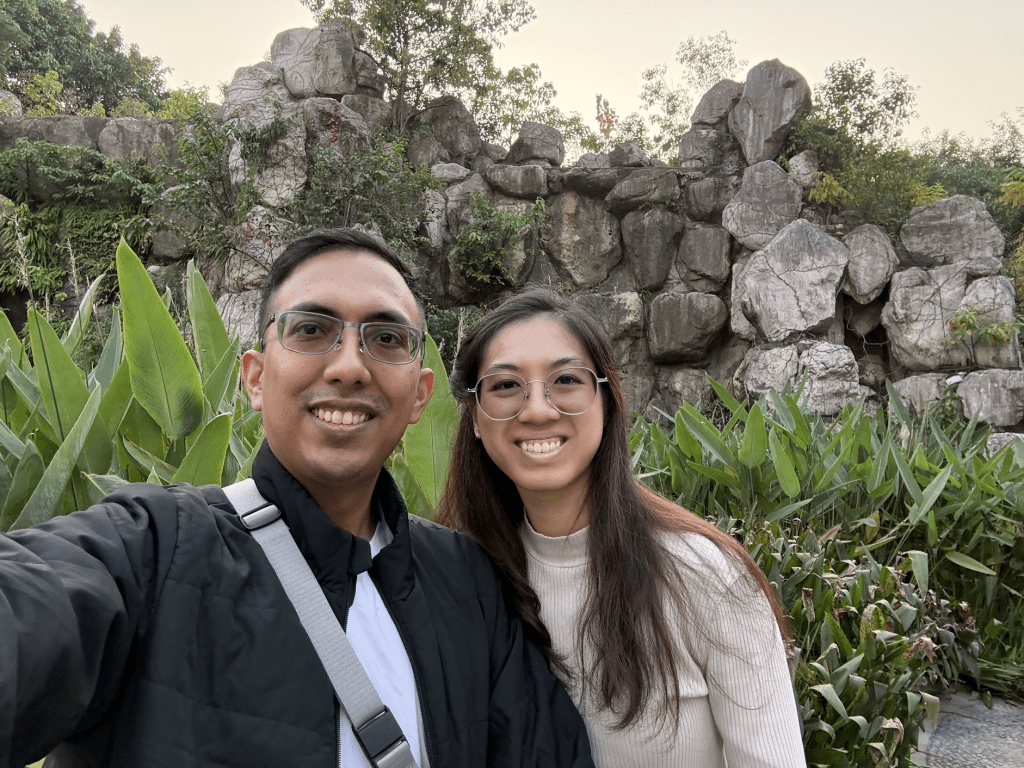
“Some surprises are best experienced with someone you love, and some memories last a lifetime.”
Day Two completed with 14,400 steps.
Day 3: Farewell Chengdu
Over the past few days, we noticed that most of the cars on the roads in China were electric. Not only that, many of them were locally produced brands that are now being exported worldwide.
One brand that truly surprised me was Xiaomi. Yes, the same Xiaomi known for smartphones and gadgets now has its own electric car. I had no idea they had ventured into the automotive industry.
While we were on the way to the Chengdu train station, I glanced out of the window. I spotted one on the road, and it looked sporty.
The highlight of the day was our high-speed rail journey to Chongqing.
When we arrived at the train station, we were mesmerized by its sheer size. It did not feel like a train station at all. It felt like an airport. There were multiple entrances, large departure halls, digital boards flashing train schedules, and crowds moving in every direction.
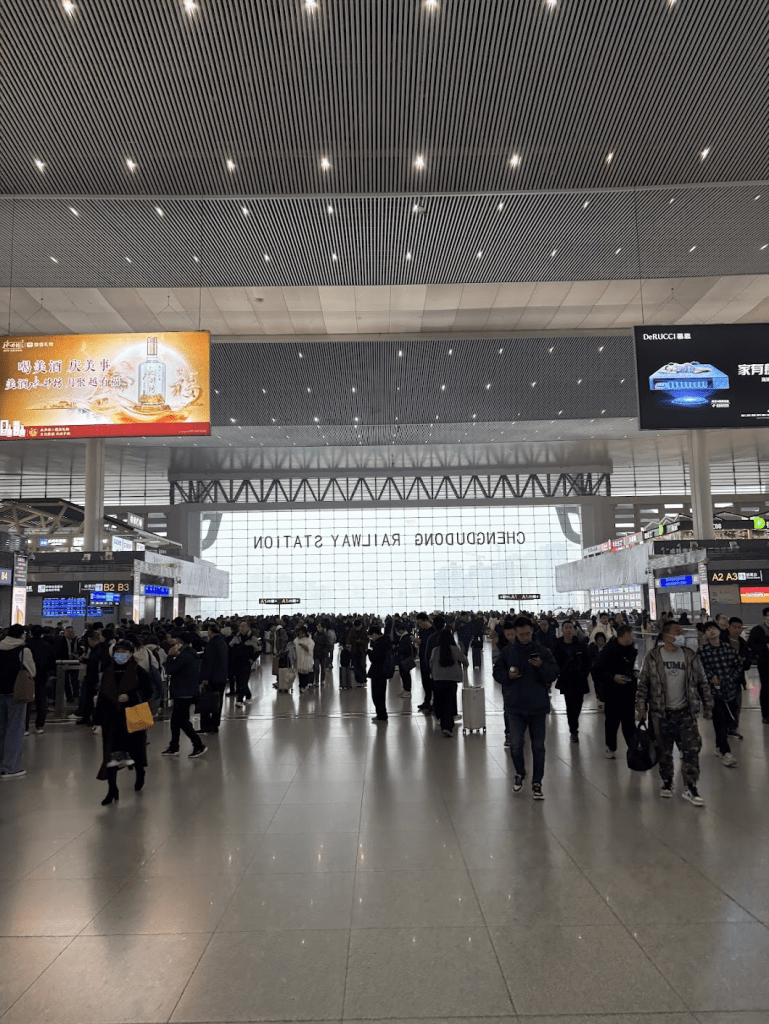
Before entering the main departure area, we had to go through security screening, just like at an airport. Bags went through the scanner, and we walked through the metal detectors.
Everything was surprisingly organized despite the massive crowd. Clear signs directed passengers to their respective gates It was efficient, orderly, and slightly overwhelming all at once.
A huge crowd had already gathered at our boarding gate. It was our first time taking the high speed rail. For a moment, we were unsure which gantry to enter. Everything felt fast paced and slightly chaotic.
Fortunately, a staff member noticed our confusion and guided us in the right direction.
As foreigners, we had to queue at a separate manual counter on either side of the gate. The locals simply scanned their IDs and walked through using facial recognition.
After what felt like a whirlwind just to get through the gates, we finally settled into our seats. The moment the train glided out of the station, a wave of calm washed over us.
Chengdu, thank you for the warmth, the spice, and the stories. Until we meet again.
To be continued….
 Leap with Luqe